
Property executive outsourcing in Singapore: what to check before you hire
Someone has to answer the tenant whose air-conditioning failed again. The contractor who missed Tuesday’s slot needs chasing, and the paperwork must be ready before the next owners’ meeting. In most Singapore estates, that person is a property executive.
When they resign or the workload grows, property executive outsourcing in Singapore is faster than a three-month search. This guide covers when it fits and what to check first.
What a property executive in Singapore does day to day
The title covers different work at different sites. At a condominium, it usually means handling resident requests and booking maintenance contractors. The person also keeps records and prepares notices and reports for the council. In a commercial or industrial building, the same role spends more time on tenants, fit-out approvals and vendor invoices. Write the scope down before you advertise, because “property executive” alone attracts very different candidates.
ProSkill Workforce lists the property executive role in its outsourcing services. If you need someone to run the whole site, a facilities manager is usually the better fit. Our wider facilities management page shows how the roles divide.
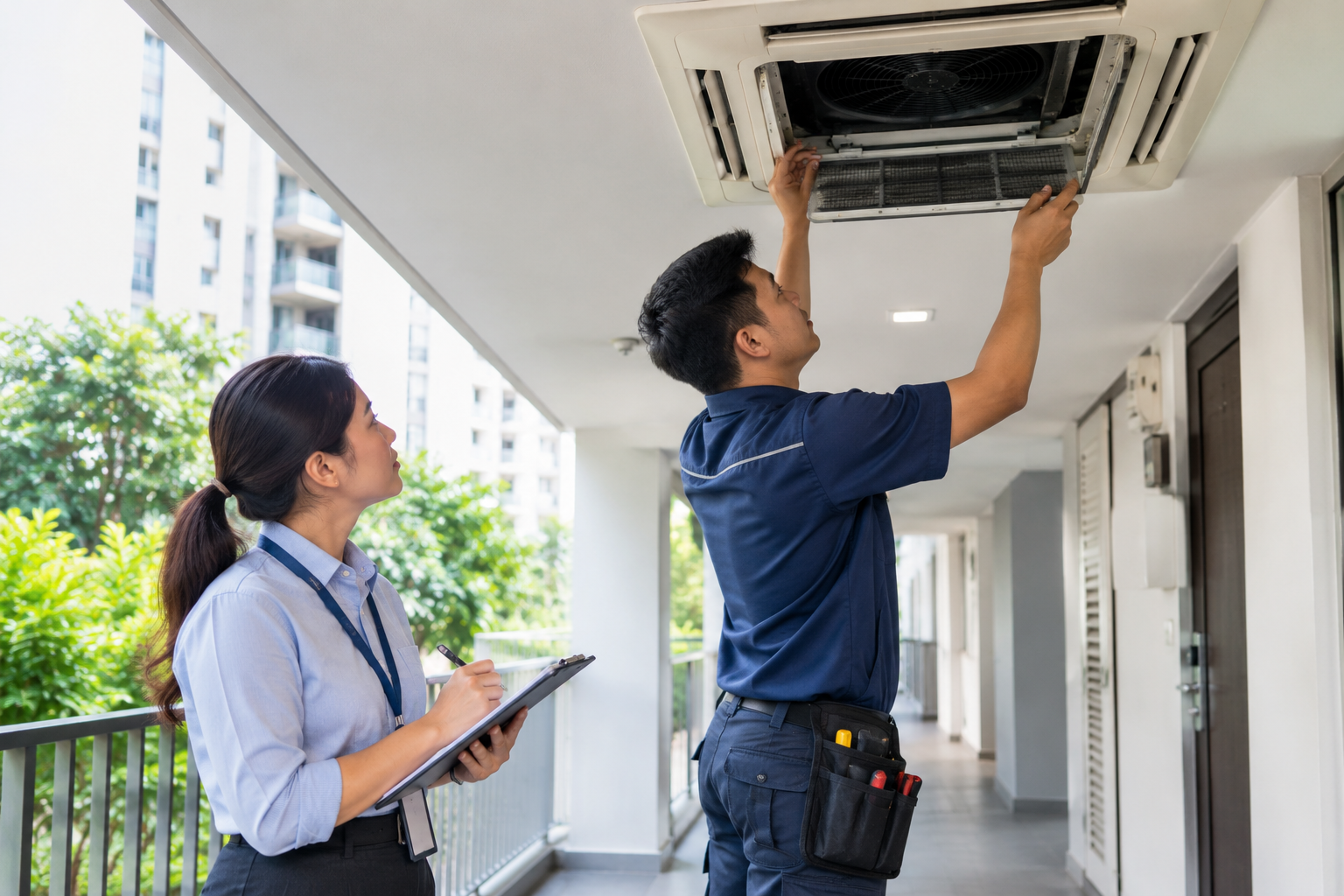
Why estates turn to property management staffing
For strata developments, a 2021 circular from the Building and Construction Authority (BCA) describes the management corporation (MCST) as the body that manages and administers the common property for all owners. Day-to-day work often goes to a managing agent.
In a 2018 forum reply, BCA told MCSTs to state requirements and performance standards clearly in the service agreement. It also said they should review the agent’s performance from time to time. The same advice applies to an outsourced executive. Put the standards in writing, then review them.
The usual triggers are plain enough. A vacancy drags on, a newly handed-over development has a backlog of defects, or a peak period stretches one person too far. Our post on when companies should outsource hiring goes through the decision in more detail. The piece on facilities management staffing covers the wider team around the role.
The Building (Strata Management) Act changed its name in 2025
A footnote in a Ministry of National Development consultation paper records a name change. The Building Maintenance and Strata Management Act became the Building (Strata Management) Act on 1 October 2025, and the building maintenance provisions moved into the Building Control Act. If your templates or contracts still cite the old name, update them.
The same consultation, open from 9 March to 8 April 2026, floated further changes. MCSTs would submit financial information and facilities records to BCA. The general body would review supporting documents for essential facilities works, and council members would face mandatory training. These were proposals, so check BCA for what has become law since. Either way, one point holds: if records may reach the regulator, the person who keeps them matters more than before.
The table below pulls the strata changes into one place. Only the first two rows are in force; the rest were proposals in a consultation that closed on 8 April 2026.
| Item | What it says | Status |
|---|---|---|
| Act renamed | The Building Maintenance and Strata Management Act became the Building (Strata Management) Act | In force since 1 October 2025 |
| Building maintenance provisions | Moved into the Building Control Act | Done when the Act was renamed |
| Financial and facilities records | MCSTs would submit financial information and facilities records to BCA | Proposal |
| Essential facilities works | The general body would review supporting documents | Proposal |
| Council members | Training would become mandatory | Proposal |
What to check before property executive outsourcing
In a 2020 reply to a newspaper letter, BCA said it had worked with industry associations on a competency framework for managing agents. The Association of Property and Facility Managers and the Association of Strata Managers run voluntary accreditation schemes. Both cover firms and individuals and set requirements on training and experience.
Neither is a licence, but it is a fair question for any candidate: what training have you done, and against which framework? Then ask operational questions, which tell you more than a CV does.
- How do you log and close a service request, and can you show a sample record?
- Have you worked in our type of building, whether strata, commercial or industrial?
- Who do you report to, and who covers when you are on leave?
- How do you handle contractor quotes, and who approves what?
In-house or outsourced property executive?
Direct hire makes sense when the role becomes the estate’s memory. That person knows which lift keeps tripping and why someone redid the roof drain. Outsourcing suits vacancy cover, a defined job such as a handover, or a trial while you work out what the role needs.
The trade-off is continuity. An outsourced executive who rotates every few months is worse than a mediocre permanent one, so agree a minimum placement period at the start. The table compares the two options side by side.
| Factor | Direct hire | Outsourced property executive |
|---|---|---|
| Continuity | Builds long-term knowledge of the estate | Depends on the minimum placement period you agree |
| Speed to fill a gap | Recruitment plus notice period | Usually quicker for cover |
| Flexibility | Fixed headcount | Suits cover, handovers and peak periods |
| Management | You appraise and manage directly | Standards and reviews written into the agreement |
| Best for | A permanent role that becomes the estate’s memory | Vacancy cover, a defined project or a trial |

Property executive outsourcing with ProSkill Workforce
We match property executives to the site type, the scope and the start date, and we keep the technical side close by. A property executive with a reliable route to a handyman and facilities maintenance team spends less time chasing. The same goes for a plumber for facilities that cannot pause or safe and compliant electrical works. Our manpower outsourcing services page lists the other roles we can supply alongside.
Property executive outsourcing: frequently asked questions
What does a property executive do in Singapore? The scope changes from site to site. At a condominium, it usually means handling resident requests, booking maintenance contractors, keeping records and preparing notices for the council. Write the scope down before you advertise the role, because the title alone attracts very different candidates.
When does property executive outsourcing make sense? It suits vacancy cover, a newly handed-over development with a backlog of defects, and peak periods when one person cannot cover everything. A trial works too, while you decide what the role needs. Agree a minimum placement period so the person does not rotate out after a few weeks.
Did the strata law change in 2025? The name did. A footnote in a Ministry of National Development consultation paper says the Building Maintenance and Strata Management Act became the Building (Strata Management) Act on 1 October 2025. The building maintenance provisions moved into the Building Control Act. A consultation from 9 March to 8 April 2026 proposed further amendments, so check BCA for what has become law since.
What is the difference between a property executive and a facilities manager? A property executive supports the day-to-day running of an estate, while a facilities manager usually runs the whole site. If you need someone accountable for contractors, budgets and compliance across the building, look at the facilities manager role first.
What should I ask an outsourced property executive before they start? Ask what training they have done and against which framework, since BCA has said it worked with industry associations on a competency framework for managing agents. Then ask for a sample service-request record. Ask who they report to, who covers their leave, and who approves contractor quotes.
Need a property executive for your estate?
Tell us the site type, the scope and the start date. Call +65-90900468 or +65-88338400, or email inquiry@proskillworkforce.com. You can also send the details through our contact page. We’ll reply with candidates who fit the scope you wrote down. ProSkill Global Recruitment Pte Ltd, EA Licence No. 26C3677 (Comprehensive Licence), provides recruitment and placement; see our recruitment services page.
Sources
- BCA, circular to MCSTs on their responsibilities (3 June 2021): https://www1.bca.gov.sg/docs/default-source/docs-corp-news-and-publications/circulars/bca-advisory-to-mcsts_responsibility-of-mcsts-3-jun-2021.pdf
- BCA, “MCSTs can turn to Strata Titles Board for help” (Straits Times Forum reply): https://www1.bca.gov.sg/resources/newsroom/mcsts-can-turn-to-strata-titles-board-for-help-the-straits-times-forum/
- BCA, “BMSMA framework empowers MCSTs to manage their own estate”: https://www1.bca.gov.sg/resources/newsroom/bmsma-framework-empowers-mcsts-to-manage-their-own-estate-lianhe-zaobao-exchange/
- MND, public consultation on proposed amendments to the Building (Strata Management) Act, Annex C: https://www.mnd.gov.sg/api/media/54dcaae7-c8d9-48fe-adb3-52fad2186b2c

Employment Pass, S Pass or Work Permit? How Singapore Employers Choose
An employer finds the right candidate, agrees a salary, then discovers the person can’t be placed on the pass they assumed. Sometimes the salary falls below a threshold. Sometimes the company has no S Pass quota left. Sometimes the role simply isn’t what that pass is for.
The three main work passes aren’t tiers of the same thing that you pick between freely. Each has its own eligibility test, its own cost structure, its own constraint on how many you can hold. Getting the match right before you make an offer avoids a conversation nobody enjoys.
Employment Pass, S Pass and Work Permit at a glance
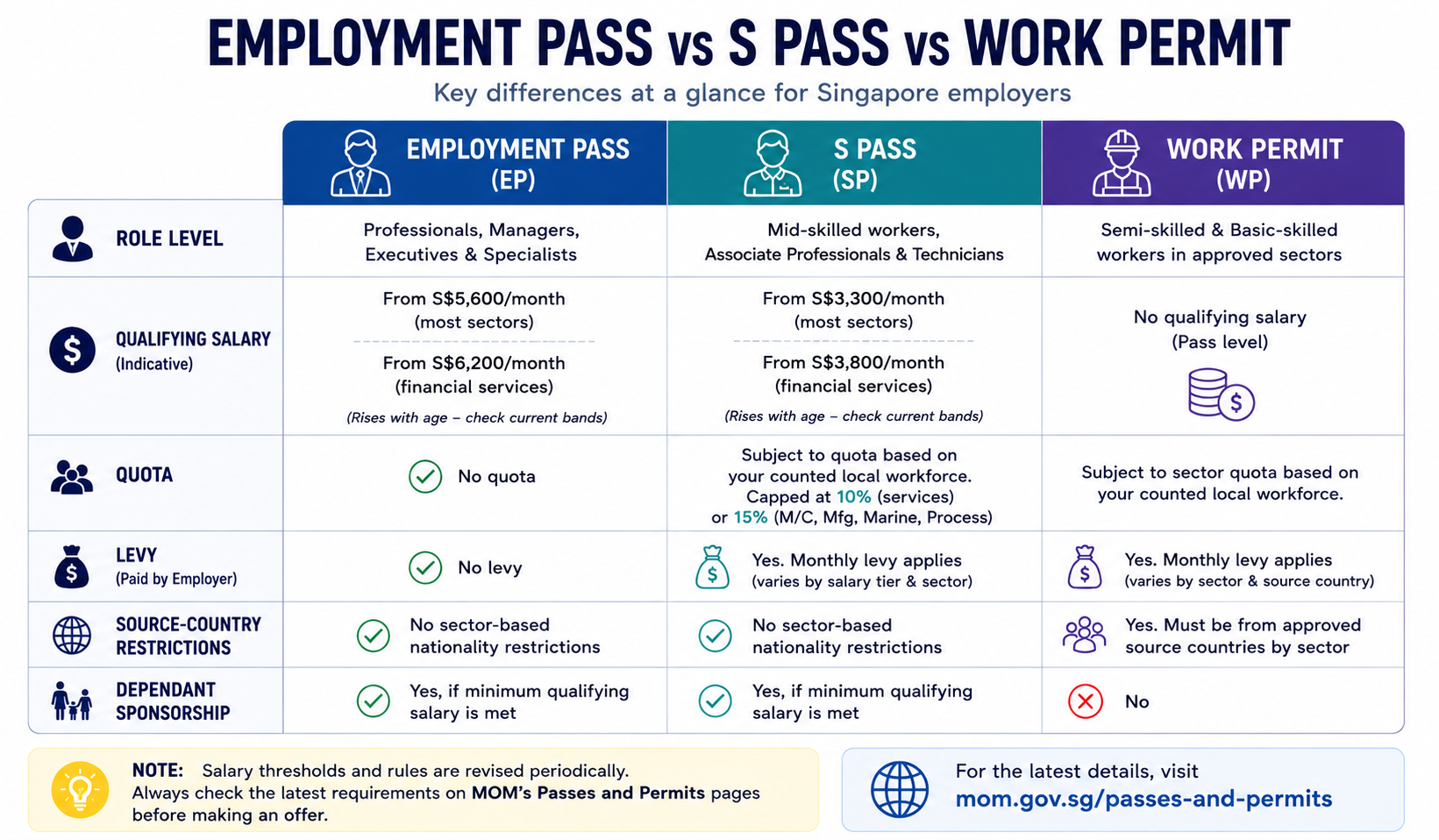
Employment Pass (EP) is for foreign professionals, managers, executives and specialists. No quota, no levy, so the direct cost is the salary. Eligibility turns on a minimum qualifying salary that rises with the candidate’s age, and on the points-based COMPASS framework introduced in September 2023.
S Pass is for mid-skilled workers, the associate professional and technician band. It has a qualifying salary that also rises with age, and it’s constrained by both a quota and a monthly levy. A degree isn’t a formal prerequisite. A diploma or technical qualification with relevant experience and salary can qualify.
Work Permit is for semi-skilled and basic-skilled workers in approved sectors: construction, marine shipyard, process, manufacturing, services. There’s no qualifying salary at the pass level. The controls are the sector quota, the monthly levy and source-country restrictions.
As a rough orientation: the EP qualifying salary has been S$5,600 a month in most sectors and S$6,200 in financial services, rising with age; the S Pass floor has been S$3,300 and S$3,800 respectively since 1 September 2025, also rising with age. Check the current age-adjusted bands and sector variations against MOM’s passes and permits pages before you structure an offer. They’ve been revised repeatedly and further increases are already scheduled.
The distinctions that actually drive the decision
Beyond the headline categories, four practical differences shape most hiring decisions.
Quota exposure is the first. The EP has no quota, so you can hire as many as you can justify at qualifying salary. The S Pass and Work Permit both consume quota derived from your counted local workforce. This is often the binding constraint for SMEs, and it’s why a company can want an S Pass hire and be unable to make one.
Levy cost is the second. EP holders carry no levy. S Pass and Work Permit holders carry a monthly levy paid by the employer, which can’t be recovered from the worker’s salary. Over a multi-year engagement the levy is a material line item that salary-only budgeting misses.
Third, source country restrictions. Work Permits are subject to approved source country lists that vary by sector. The S Pass isn’t subject to sector-specific nationality restrictions in the same way. This matters when you have a specific candidate and not a generic requirement.
Fourth, family sponsorship. EP holders at qualifying salary can sponsor dependants. Work Permit holders cannot. For senior technical hires weighing competing offers this is frequently decisive, and worth knowing before you negotiate.
The quota question, and why it moves
For S Pass and Work Permit hiring, your entitlement is derived from your counted local workforce. “Counted” is doing a lot of work in that sentence.
MOM computes the figure from your CPF records, averaged over the last three months, and only local employees meeting the Local Qualifying Salary threshold count fully. The threshold rose on 1 July 2026, which reduced quota entitlement for employers whose local salaries sat between the old and new bands without anyone leaving the company.
S Pass holders are separately capped within your overall quota, at 10% of total workforce in the services sector and 15% in construction, manufacturing, marine shipyard and process. Both limits apply simultaneously, so clearing the overall ceiling doesn’t mean you have S Pass room.
If you’re planning foreign headcount and haven’t recalculated since mid-2026, our guide to how the Local Qualifying Salary affects your quota walks through the counting rules and the three-month lag.
Matching the role to the pass
Some practical guidance on where each fits.
Choose EP where the role is genuinely professional, managerial, executive or specialist, the salary clears the qualifying threshold for the candidate’s age, and you want to avoid quota and levy exposure. Bear in mind that COMPASS assesses the application on points, so salary alone doesn’t guarantee approval.
Choose S Pass where the role is mid-skilled and technical, and the salary sits above the S Pass floor but below EP level. Check your S Pass sub-quota before committing. This is the pass most often blocked by quota and not by eligibility.
Choose Work Permit where the role is semi-skilled or basic-skilled within an approved sector, and you can accommodate the sector quota, the levy and the source country restrictions.
The mistake to avoid is fitting a candidate to a pass by adjusting the job title. MOM assesses whether the role is genuinely what the pass is for, and whether the employer made genuine efforts to hire locally. A mid-skilled role relabelled as managerial doesn’t become an EP role.
Changes already announced
Two things worth building into multi-year planning.
The Work Permit application age limit rose with effect from 1 July 2026. New applications are now accepted for workers below 62, up from below 61, with the maximum employment age moving to 64. This tracks the statutory retirement age, which rose from 63 to 64 on the same date.
The EP minimum qualifying salary rises from 1 January 2027, to S$6,000 in most sectors and S$6,600 in financial services, with the age-adjusted ceilings moving up in step. S Pass thresholds are on the same trajectory, with reported increases to S$3,600 and S$4,000 from the same date. Confirm the final figures and sector variations against MOM before budgeting against them.
There is a third change that matters more than either, and it is easy to miss because it isn’t a number. From 1 July 2026, COMPASS applies to all Employment Pass renewals for the first time. Until then a renewal was largely a salary check; now the same points-based assessment that governs new applications governs renewals too.
The practical implication is that a renewal isn’t a formality on either front. A pass holder whose salary sat comfortably above the floor at application may sit below it at renewal, and a pass granted before COMPASS applied to renewals now has to earn its points like any new application.
Where outsourcing changes the calculation
Not every manpower requirement needs solving through your own quota.
Where the need is project-bound, seasonal, or larger than your entitlement allows, the headcount can sit with a manpower supply partner instead of with you. That’s a legitimate and common structure in Singapore, particularly in construction, marine and facilities. It needs setting up properly and not treating as a workaround, because MOM looks at the substance of the employment relationship. For a defined project scope it’s often the more workable route than restructuring your local payroll to unlock quota.
For site-based roles this is the more common approach, and our overview of construction manpower outsourcing covers how those arrangements are usually structured. Where the requirement is a permanent professional hire, engineering recruitment on an EP basis is generally the cleaner route, since it carries no quota exposure. Broader sector coverage sits on our manpower outsourcing services page.
Frequently asked questions
Is there a minimum salary for a Work Permit? No. The Work Permit has no qualifying salary. Hiring is controlled by sector quota, monthly levy and source country restrictions, not by a wage floor.
What is the difference between an S Pass and an Employment Pass? The EP is for professionals, managers, executives and specialists, with a higher salary threshold, no quota and no levy, and assessment under COMPASS. The S Pass is for mid-skilled associate professionals and technicians, with a lower salary threshold but subject to both quota and levy.
Does an S Pass require a degree? Not as a formal prerequisite. A diploma or relevant technical qualification combined with sufficient experience and salary can qualify.
Can I hire unlimited Employment Pass holders? There’s no quota on the EP. Each application is still assessed on qualifying salary and COMPASS, so approval isn’t automatic.
Why was my S Pass application blocked when the candidate qualified? Most often because of the S Pass sub-quota — 10% of total workforce in services, 15% in other sectors — and not the candidate’s eligibility. Both the overall quota and the sub-quota must have room.
Do variable payments count toward the qualifying salary? The qualifying salary is assessed on fixed monthly salary. Allowances, commissions, bonuses and overtime are generally excluded. Confirm the current treatment against MOM before structuring an offer around it.
Check the constraint before you make the offer
Most work pass problems in Singapore aren’t eligibility problems. They’re quota problems discovered after an offer has been made, which is an expensive point at which to find out.
ProSkill Workforce Pte Ltd provides manpower outsourcing and recruitment services across construction, marine, manufacturing, logistics, facilities and engineering in Singapore, for employers resourcing both project-based crews and permanent professional roles.
Related reading: How the Local Qualifying Salary affects your foreign worker quota · Construction manpower outsourcing in Singapore · Engineering recruitment agency services · What a manpower recruitment agency should deliver
Tell us the roles and duration and we’ll set out the workable options. Call +65 9090 0468 or email inquiry@proskillworkforce.com.
Work at Heights in Singapore: Fall Prevention Plans, Permits, and Who Needs What
Falls from height have been one of Singapore’s most persistent causes of workplace death, and the WSH Council’s guidance on preventing falls still describes them as contributing to more than a third of total workplace fatalities each year.
The recent numbers are better than that. MOM’s Workplace Safety and Health Report 2025 records 36 workplace fatal injuries, with vehicular incidents, falls from height, and collapse or failure of structures and equipment together accounting for 78% of them. Fatal falls from height hit a ten-year low of four in 2024.
That improvement is real, and it doesn’t change the regulatory position. Injuries from falls are typically more severe than other accident types, which is why the regulations governing this one activity remain unusually detailed — and why an inspector’s questions don’t get easier as the statistics improve.
The detail is where employers get caught. Most site teams know a harness is required. Fewer can say precisely when a Fall Prevention Plan becomes mandatory, at what point work becomes hazardous work at height requiring a permit, or who is legally allowed to issue that permit. Those are the questions an inspector asks, and they determine whether your paperwork holds up.
The regulations that govern work at height
Work at height in Singapore is governed by the Workplace Safety and Health (Work at Heights) Regulations 2013, made under the WSH Act. The regulations place duties on employers, self-employed persons and principals to implement control measures that prevent falls or reduce the consequences when they occur.
The structure of the regulations tells you what matters. Separate provisions deal with covers, guard-rails and barriers, travel restraint systems, fall arrest systems, inspection, staircases, safe access and egress between working levels, teagle openings, work on roofs, fragile surfaces and ladders. An entire Part is devoted to the permit-to-work system for hazardous work at height, and a further Part covers industrial rope access systems.
Alongside these, the WSH (Risk Management) Regulations require a risk assessment for work activities. Work at height included.
The Fall Prevention Plan
A Fall Prevention Plan is a site-specific plan to eliminate or reduce the risk of falls. It isn’t a generic corporate document reused across projects. The whole point is that it reflects the actual site. Anyone searching for a fall prevention plan template Singapore should treat what they find as a starting structure and not a compliance artifact.
As an occupier of a worksite, shipyard, or premises for bulk storage of toxic or flammable liquid, you’re required to implement an FPP where work at height is carried out. The requirement reaches further than most employers assume. Per the WSH Council, it also applies to factories that manufacture or process petroleum, petrochemicals and their products, factories manufacturing chlorine, fluorine, hydrogen fluoride or carbon monoxide, and any factory employing 50 or more people. A mid-sized manufacturer with no construction work at all can sit inside this.
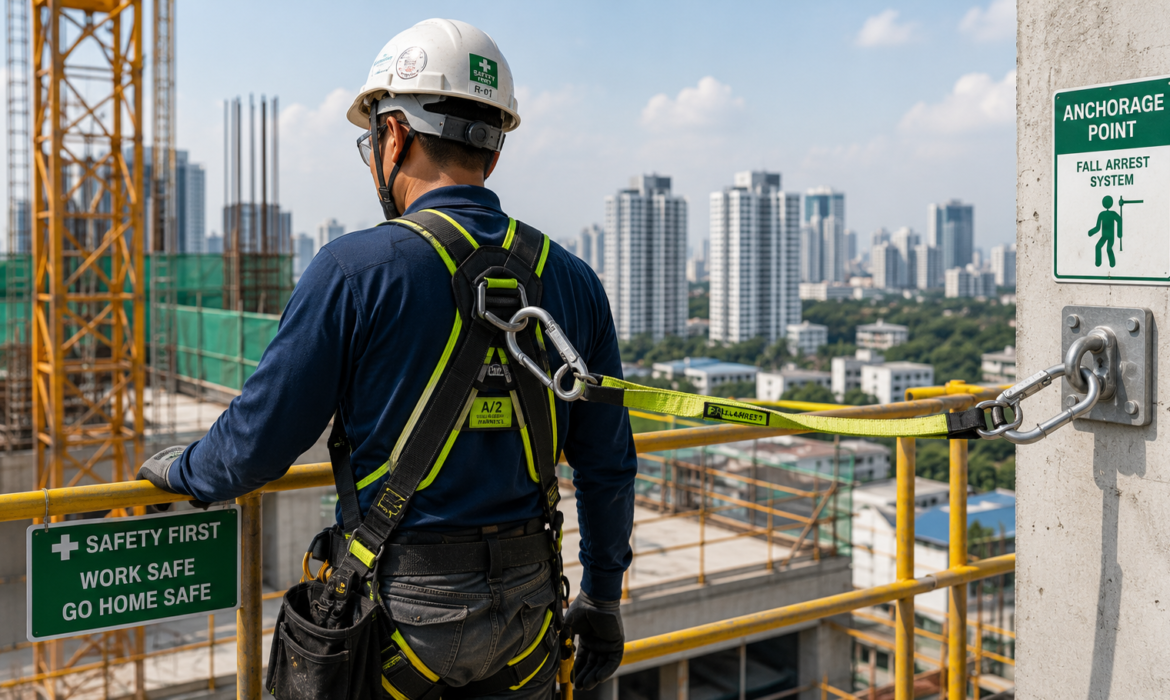
A meaningful FPP identifies the hazards, the control measures, the anchorage and equipment to be used, the rescue arrangements, and the competent persons responsible. Rescue is the element most often treated as an afterthought. A fall arrest system that stops a worker mid-air without a plan to retrieve them has solved half the problem, which is why fall rescue belongs inside your emergency response plan and not beside it.
The plan should be implemented in accordance with any Approved Code of Practice issued by the WSH Council.
The hierarchy of controls, in the order that matters
Singapore’s framework expects controls applied in order of effectiveness, not convenience.
Eliminate the work at height where reasonably practicable, through design changes, ground-level assembly or remote methods. Where it can’t be eliminated, install passive fall prevention: permanent guard-rails, safety mesh, covers over openings. These protect everyone in the area without depending on individual behavior.
Below that sit travel restraint systems, which stop a worker reaching an unguarded edge in the first place, and then fall arrest systems, which act only after a fall has begun.
Administrative controls — procedures, briefings, signage — come last.
The practical implication is that reaching for a harness first is the wrong instinct. A harness is a late-stage control. If it’s the only control in place, the assessment behind it was probably incomplete.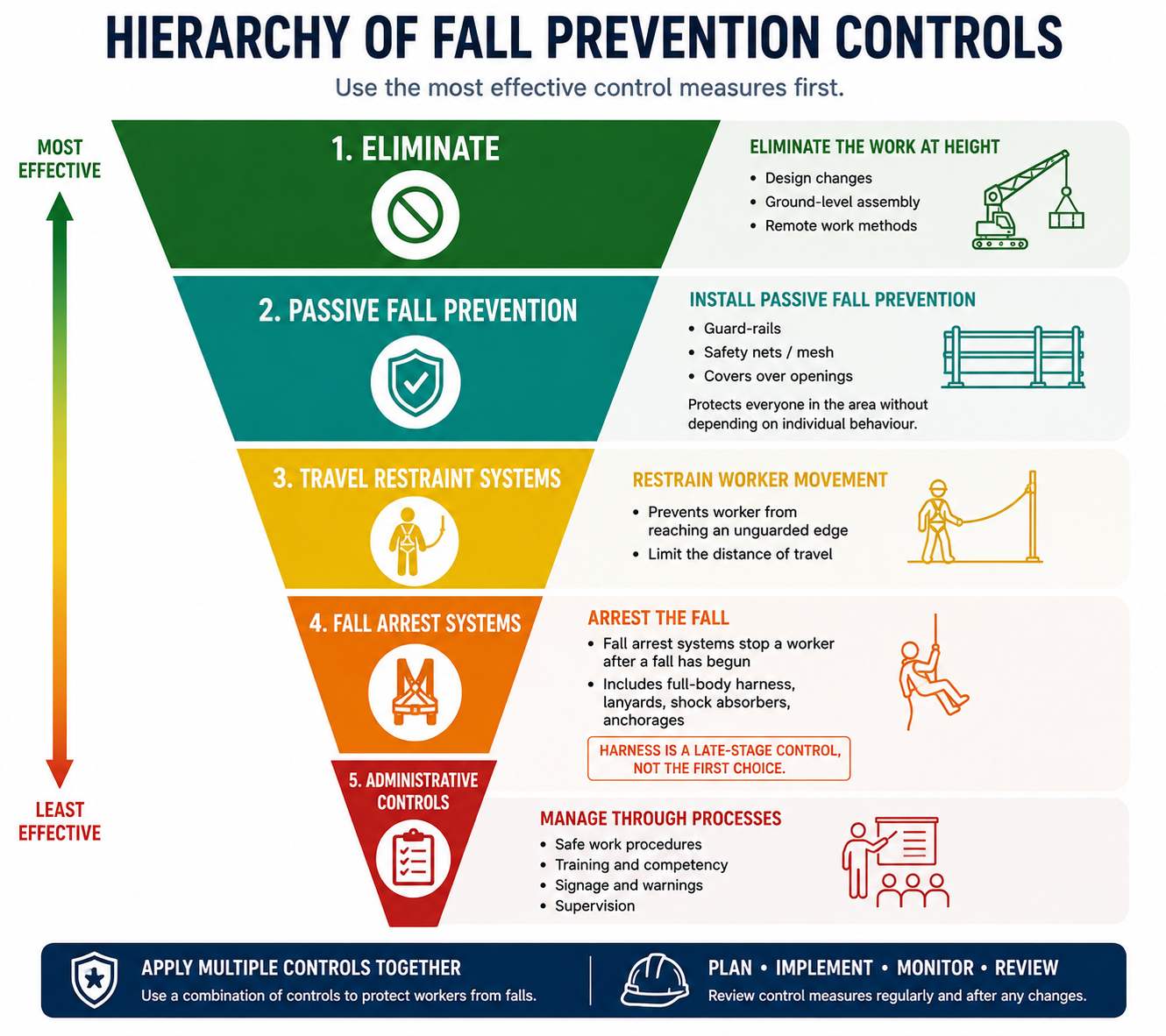
When work becomes “hazardous” and needs a permit
This is the threshold that generates the most confusion on Singapore sites.
A permit-to-work system is a documented process required for hazardous work at height, defined by a combination of the height a person could fall and the type of workplace. The height triggering the permit requirement is distinct from the general definition of work at height. Two different thresholds are in play: one for whether the activity is regulated at all, one for whether a permit is required. Confirm both against the regulations for your workplace type.
The regulations set out the permit process in sequence. Application for a permit, evaluation of the application, issue of the permit, posting of the permit and the supervisor’s duty, monitoring of the work, a duty to report incompatible work, and daily review and revocation. Two provisions deserve emphasis.
Daily review comes first. A permit isn’t a document you raise once and leave pinned to a board for the duration. The regulations provide for daily review and revocation, which means the permit reflects today’s conditions and today’s authorized workers.
Then incompatible work. There’s a specific duty to report it. Hot work directly below a work-at-height activity, or a lifting operation crossing the same zone, creates risk that neither activity’s own permit captures. Someone has to be looking across permits, not just within them.
Competency is individual and expires
Workers performing work at height must hold current WAH competency certification from a MOM-approved training provider, and this applies to every individual regardless of employment status. A subcontractor’s worker, an agency worker and a directly employed worker are all subject to the same requirement, and the host site carries responsibility for ensuring the people on it are trained and equipped. Employers bringing in crews through a construction manpower supply arrangement should confirm certification currency at mobilization instead of assuming the supplier tracked it.
Certification also lapses. The practical control is a training matrix showing who is certified, when each certificate expires and when refreshers are scheduled.
The failure mode here is mundane. A long project runs past a certificate expiry, nobody is tracking it, and a worker who was properly certified at mobilization isn’t certified at the time of the incident.
Where site teams commonly fall short
Five patterns account for most of it.
A generic Fall Prevention Plan, first. If the FPP doesn’t name the actual anchorage points and the actual rescue arrangement for this site, it’s documentation and not control.
Permits raised but not monitored, second. The regulations impose duties around posting the permit, supervision and monitoring the work. A permit in a folder with nobody watching the activity satisfies none of them.
Third, nobody checking across concurrent activities. The duty to report incompatible work exists precisely because parallel operations create hazards that individual permits miss.
Fourth, ladders treated as outside the system. The regulations address ladders specifically. Short-duration work on a ladder is still work at height.
Fifth, certification tracked only at mobilization. See above. This is the most avoidable gap on long projects.
Getting this right is largely a question of whether someone competent owns the system day to day. On sites where a registered WSH Officer or WSH coordinator holds the fall prevention plan, the permits and the training matrix together, these gaps tend not to open. Where responsibility is split across people who each assume someone else is tracking it, they do.
Frequently asked questions
Does every work-at-height activity need a permit-to-work? No. A permit is required for hazardous work at height, which is a narrower category defined by height and workplace type. Lower-risk work at height still requires a Fall Prevention Plan, risk assessment and appropriate controls.
Is a Fall Prevention Plan the same as a risk assessment? No. The risk assessment is required under the WSH (Risk Management) Regulations across work activities generally. The Fall Prevention Plan is a site-specific plan addressing fall risk in particular. Related, but not interchangeable.
Who can issue a permit-to-work? The regulations set out an application, evaluation and issue process involving designated roles, with an authorized person evaluating and issuing. Confirm the specific competency requirements for each role against the regulations before assigning them.
Do subcontractors’ workers need their own WAH certification? Yes. Competency certification is individual. Every person performing work at height needs valid certification regardless of who employs them, and the site is responsible for ensuring this.
Does work on a flat roof require a permit? Not necessarily. There are situations where a permit may not be required, such as a flat roof with a perimeter parapet wall of sufficient height and no openings or open sides. Confirm the specific exemptions against the regulations instead of relying on a general description.
How long is a permit valid? The regulations provide for daily review and revocation, so permits are managed on a short cycle and not issued open-ended for the duration of a task.
Make one person accountable for the system
Work at height compliance in Singapore isn’t difficult to understand. It’s difficult to sustain, because it depends on documents staying current, permits being reviewed daily and certifications being tracked over months. Those are ownership problems more than knowledge problems.
ProSkill Workforce Pte Ltd places WSH professionals including registered WSH Officers and safety supervisors across construction, marine, manufacturing and facilities projects in Singapore, and provides WSH consultancy covering risk assessment, safe work procedures and safety audits.
Related reading: Workplace safety and health officer services · WSH risk assessment services · Workplace safety consultancy in Singapore
Tell us the site type, the work scope and the project duration, and we’ll set out what coverage the work at height component needs. Call +65 9090 0468 or email inquiry@proskillworkforce.com.
Reporting a Workplace Accident to MOM: What Counts, and the 10-Day Clock
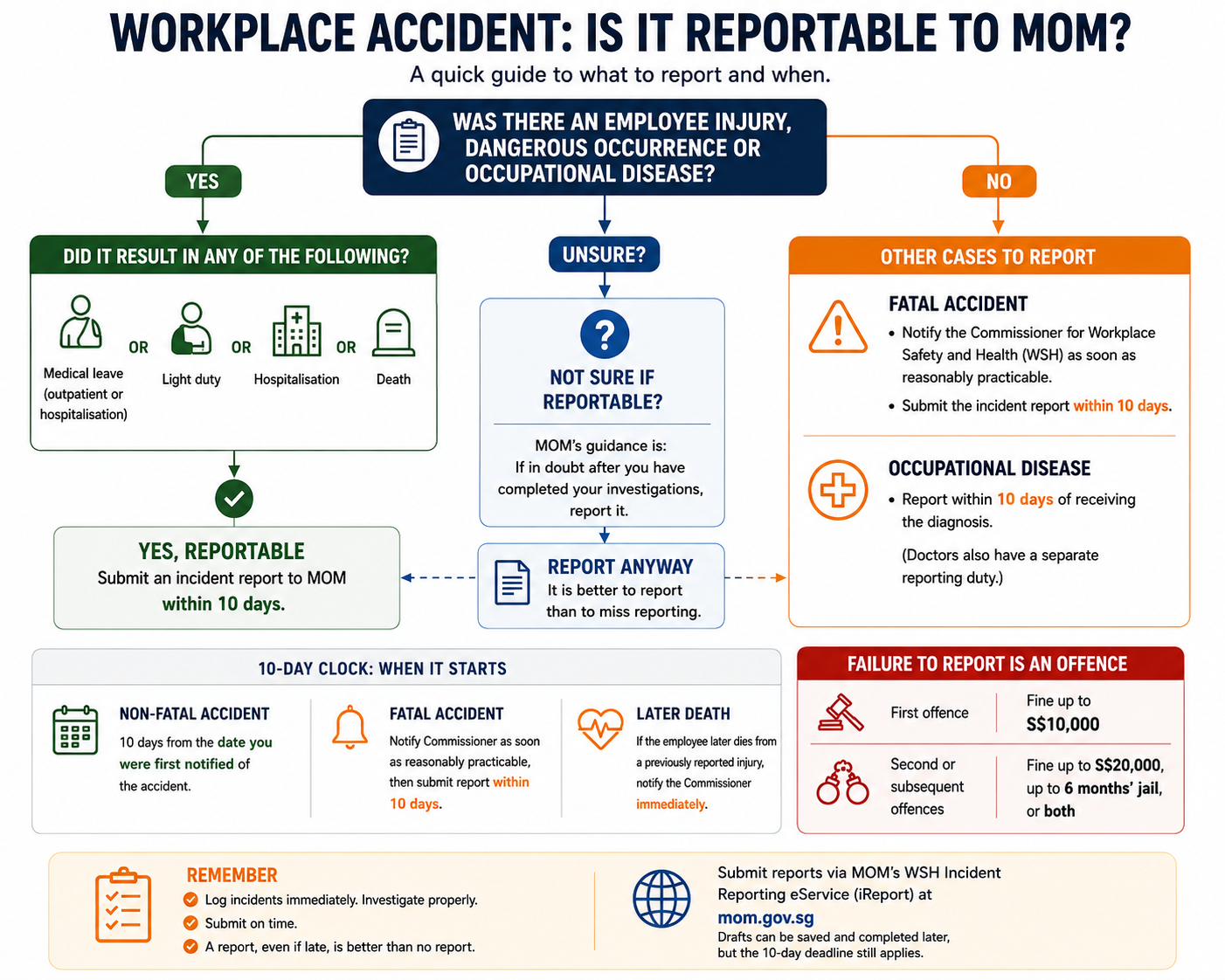
If you’re reading this while a workplace accident is still open, here’s the short version. Report within 10 days. If you’re unsure whether the accident qualifies, MOM’s own guidance is to report it. Failing to report is an offence carrying a fine of up to S$10,000 for a first offence.
The longer version matters because the reportable threshold is lower than most employers assume, and several common scenarios that don’t look like workplace accidents are reportable.
What counts as a reportable workplace accident
Work-related accidents, dangerous occurrences and occupational diseases must all be reported to MOM. The requirements differ by type, and so does who carries the duty. Employer, workplace occupier or doctor, depending on the situation.
For a work injury, MOM’s guidance on what and when to report sets the trigger as an employee injured in a work accident, or who contracted a disease from work exposure to a biological or chemical agent, resulting in any of the following: outpatient or hospitalisation leave, light duty, or death.
That threshold is worth reading twice. Light duty alone makes an accident reportable. So does any instance of medical leave. MOM’s work injury claim guidance for employers states that an employee needs to be hospitalised or given any instance of medical leave or light duty for a non-fatal accident to be reportable.
This is where employers who learned the rules some years ago go wrong. An older framework was widely understood to require more than three consecutive days of medical leave before a report was due, and that understanding is still circulating in industry articles. Working from it today means under-reporting.
Scenarios employers routinely miss
MOM’s guidance and industry commentary converge on a few situations that don’t feel like reportable workplace accidents but are.
A medical condition suffered at the workplace counts. MOM’s examples include an employee suffering a heart attack or stroke at work, and the employer reports it. Work-related traffic accidents also fall within scope, whether the worker was travelling for work or on company transport. So do injuries during overseas assignments, for Singapore residents employed by a Singapore employer.
Incidents involving another employer’s workers on your premises are the ones that cause most confusion. MOM’s own example is a fire explosion at a construction worksite injuring two workers, where the duty falls on the employer of the injured workers, with the occupier notifying the Commissioner. On a multi-contractor site, the reporting duty may not sit with the party who first learns about the incident.
Occupational disease works on a slightly different clock. Where a doctor diagnoses one, an incident report goes in within 10 days of receiving the diagnosis, and medical practitioners have their own separate reporting duty.
When the clock starts
The deadline is 10 days. The start point differs by case type.
For non-fatal accidents, the 10 days run from the date you were first notified of the accident.
For fatal accidents, notify the Commissioner for Workplace Safety and Health as soon as reasonably practicable, then submit the incident report within 10 days.
If an employee later dies from an earlier reported injury, notify the Commissioner immediately.
The distinction between “date of accident” and “date you were first notified” matters on sites where an injury travels up the chain slowly. It also means an internal log capturing the date a supervisor first hears about an injury is worth keeping, because it establishes when your clock started.
What non-compliance costs
Per MOM, failing to report as an employer is an offence and you’ll be fined up to S$10,000 for the first time. For second or subsequent offences, the penalty is a fine of up to S$20,000, up to six months’ jail, or both.
There’s an important practical point here. If you’ve already missed the deadline, the obligation doesn’t lapse. You still must report, and the reporting system asks for the reason for late reporting. A late report is a materially better position than no report, because the offence attaches to the failure to report.
After the report
Submitting the report isn’t the end of the process.
MOM may investigate the accident. Separately, the law requires you to review and revise your risk assessment in light of the incident and brief workers on the revised controls. An incident that produces a report but no change to the workplace safety and health control measures on site leaves the same conditions in place. Our WSH risk assessment services page covers what that revision involves.
If the injured employee’s medical leave is extended after you file, the report needs updating. Employers and occupiers must also retain incident reports.
Reports go through MOM’s WSH Incident Reporting eService (iReport) on mom.gov.sg, alongside related eServices for amending submitted reports. Drafts can be saved and completed later, though the deadline runs regardless.
Build the process before you need it
Employers who handle incident reporting badly are rarely acting in bad faith. They’re learning the eService for the first time under time pressure, with an injured worker, an anxious client, and a supervisor who reported the injury four days late.
A few things prevent that. Log every instance of work-related medical leave or light duty the moment it happens, so the clock is never missed by accident. Make sure more than one person knows how to submit through iReport. And decide in advance who investigates, because a report filed without a proper investigation behind it tends to produce follow-up questions you can’t answer.
For sites where investigation capability is thin, resource this before an incident and not after. A structured workplace incident investigation establishes what happened and feeds the risk assessment revision the law requires, which is the part that actually reduces the chance of a repeat. Sites running regular toolbox briefings and a behavior-based safety program tend to surface near-misses earlier, and that’s the cheapest version of this problem to solve.
Frequently asked questions
How long do I have to report a workplace accident in Singapore? Ten days. For non-fatal accidents, from the date you were first notified. For fatal accidents, notify the Commissioner as soon as reasonably practicable and submit the report within 10 days.
Is an accident reportable if the worker only got light duty? Yes. Light duty alone makes a work accident reportable, as does any instance of medical leave.
What if I’m not sure whether an incident is reportable? MOM’s guidance is that if there’s doubt after you’ve completed your investigations, report it.
What happens if I miss the 10-day deadline? You must still report. The eService asks for the reason for late reporting. Failing to report at all is the offence, carrying a fine of up to S$10,000 for a first offence.
Is a heart attack at work reportable? MOM’s examples include an employee suffering a medical condition such as a heart attack or stroke at the workplace, with the employer reporting.
Who reports when a subcontractor’s worker is injured on my site? Generally the employer of the injured worker reports, with the occupier notifying the Commissioner. Confirm the specific allocation for your situation against MOM’s guidance, since it varies by incident type.
Do I need to do anything after submitting the report? Yes. Review and revise your risk assessment and brief workers on the new controls. Update the report if the worker’s medical leave is later extended.
Get the reporting duty owned by someone specific
Ten days is a short window when an incident has just happened and the people who would normally handle it are dealing with the aftermath. Organizations that meet it reliably have decided beforehand who logs, who investigates and who submits.
ProSkill Workforce Pte Ltd provides WSH consultancy including incident investigation, risk assessment and safety audits, and places registered WSH professionals with Singapore employers across construction, marine, manufacturing, logistics and facilities.
Related reading: WSH risk assessment services · Workplace safety and health officer services · Workplace safety consultancy in Singapore · Emergency response plans for Singapore workplaces
Call +65 9090 0468 or email inquiry@proskillworkforce.com.
The Local Qualifying Salary Rose to S$1,800 in July 2026. Your Quota Moved With It.
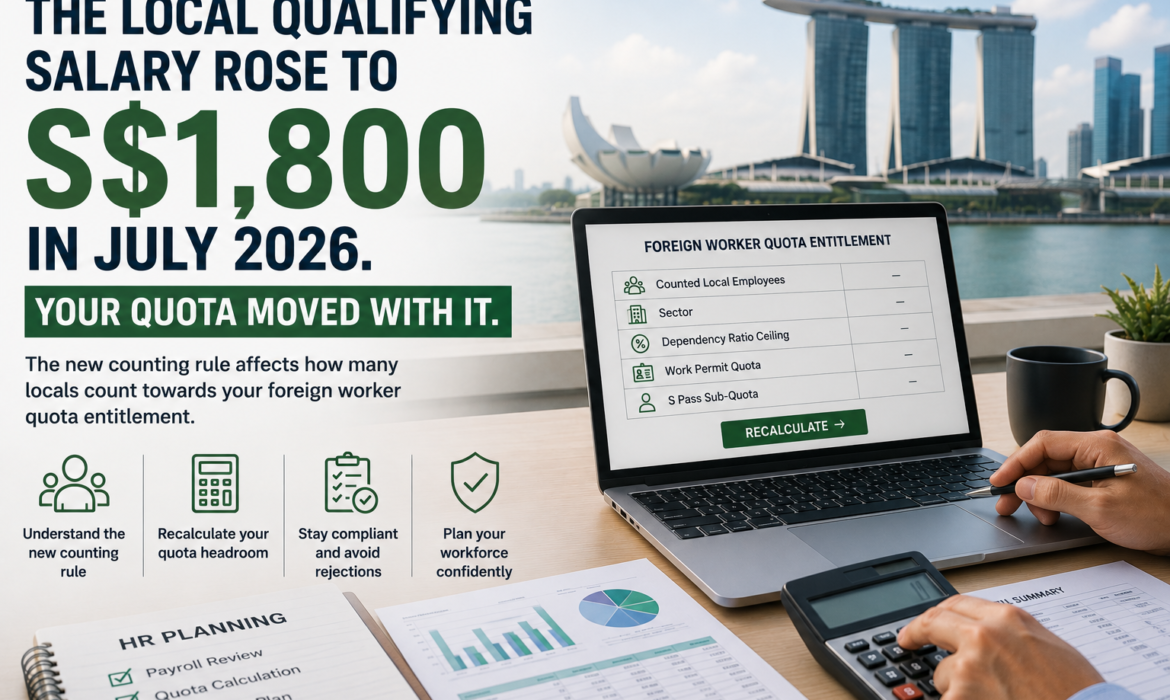
[IMAGE — Hero, 1200×630 | Photo or clean editorial graphic: a payroll/HR screen or spreadsheet with headcount figures, paired with a Singapore worksite. Should read “HR planning,” not “construction.” | Alt: “HR team recalculating foreign worker quota entitlement after the Local Qualifying Salary change” | Filename: local-qualifying-salary-quota-hero.jpg]
An employer with ten local staff on the payroll assumes ten local staff worth of quota entitlement. That assumption is wrong more often than most HR teams realize, and on 1 July 2026, when the Local Qualifying Salary moved, it became wrong for a lot more companies.
The Local Qualifying Salary is the salary a local employee must earn before MOM counts them toward your foreign worker quota. It isn’t a minimum wage. It’s a counting rule, and it decides how much Work Permit and S Pass headroom your business actually has. When the threshold moves and your payroll doesn’t, employees who used to count fully stop counting fully. Your entitlement contracts without a single person leaving the company.
How the Local Qualifying Salary counts your local employees
The mechanics matter here, because this is where most of the surprises come from.
As set out in MOM’s levy and quota requirements, MOM uses information from your company’s CPF account to compute the number of local employees you have, and that figure determines your foreign worker quota. The calculation runs on the average number of local employees over the last three months, which is why MOM stresses declaring paid salaries and CPF contributions promptly and accurately.
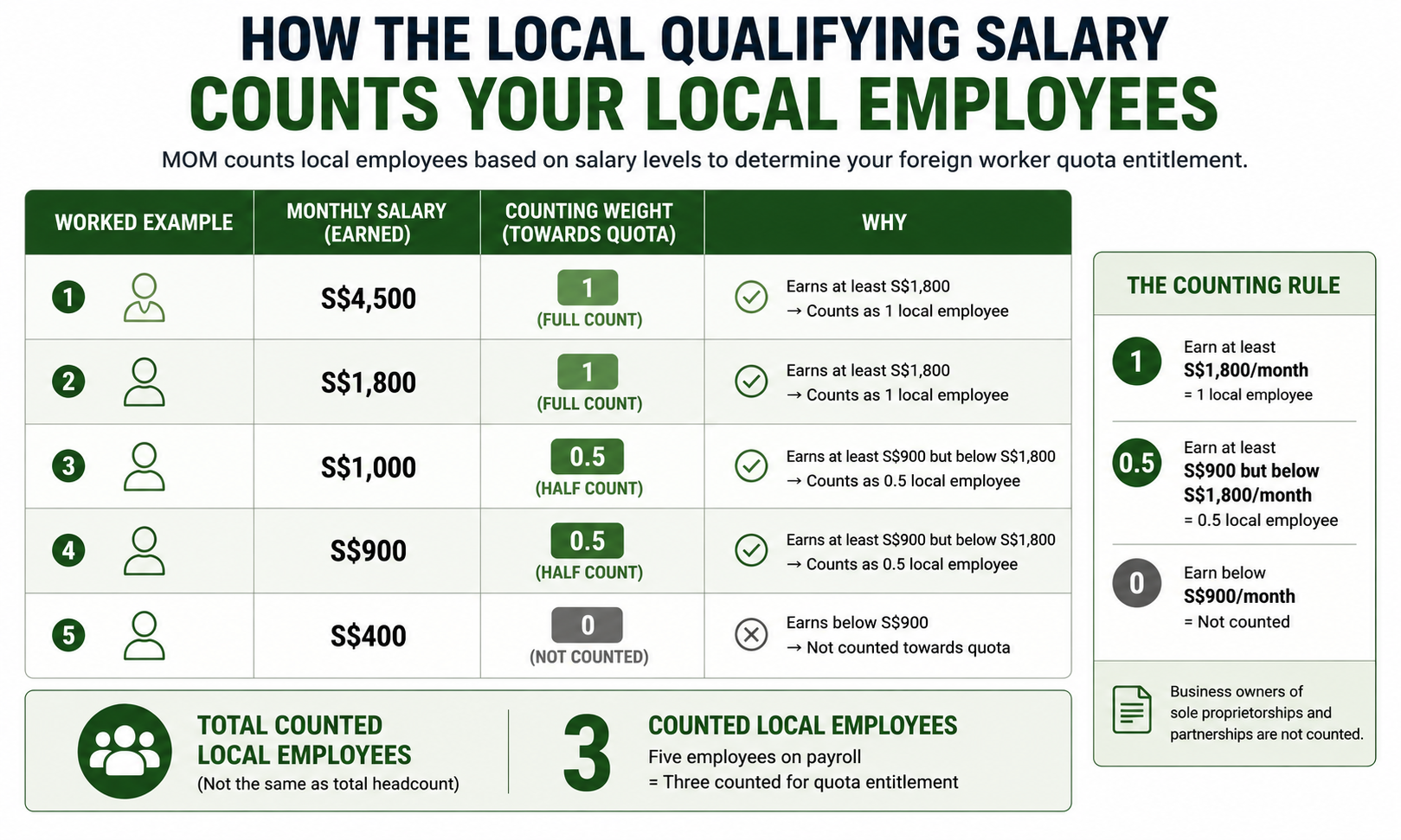
A Singaporean or Permanent Resident employed under a contract of service, the company’s own director included, is counted as:
- 1 local employee if they earn at least S$1,800 per month
- 0.5 local employee if they earn at least S$900 but below S$1,800 per month
- Below S$900, the employee is not counted at all
A worked example makes the effect concrete. Five employees earning S$4,500, S$1,800, S$1,000, S$900 and S$400 produce a total of three counted local employees, not five. The first two count as one each. The next two count as half each, making one between them. The employee at S$400 contributes nothing to quota entitlement.
Two more things. Business owners of sole proprietorships and partnerships aren’t counted. And a newly hired employee only shifts your quota once you’ve paid their first full-month salary and CPF contribution, so anyone planning a hire against quota headroom that doesn’t exist yet should build that lag in.
What changed on 1 July 2026
The full-count threshold rose from S$1,600 to S$1,800, and the half-count band now sits at S$900 to below S$1,800. The part-time hourly equivalent moved at the same time, from S$9.00 to S$10.50 an hour.
The important point is structural, not numerical. Because the counting bands moved upward, an employer whose local salaries sat between the old and new thresholds saw their counted local headcount fall on 1 July without any change to their actual workforce. Full counts became half counts. Half counts became zero.
Quota entitlement is derived by applying your sector’s Dependency Ratio Ceiling to that counted local figure. Shrink the base and the ceiling calculation returns a smaller number.
Why employers find out late
Nothing about this generates an alert. There’s no letter saying your entitlement dropped.
What happens instead is that a Work Permit application gets rejected, or a renewal doesn’t go through, and someone works backward from the rejection to discover the quota base moved months earlier. By that point the project is already staffed on an assumption that no longer holds.
Three situations produce the sharpest surprises.
Companies with part-time and lower-wage local staff are the most exposed. Cleaners, service crew, admin staff sitting near the threshold are exactly the salaries that cross a counting band when it moves.
Local attrition is the second. A local resignation is a headcount problem in most managers’ minds. It’s also a quota problem, and the three-month averaging delays the effect.
Third is sector misclassification. Each sector carries a different Dependency Ratio Ceiling, and the S Pass sub-quota differs too. MOM caps S Pass holders at 10% of total workforce in services and 15% in construction, manufacturing, marine shipyard and process. A company classified into the wrong sector can be planning against a ceiling that was never theirs.
Working out your real headroom
The practical sequence for an employer who hasn’t checked since July.
Start with your CPF records, not your headcount list. The quota is computed from what you actually paid and declared, not from how many names sit on the org chart.
Apply the counting rule employee by employee. Full count at S$1,800 and above, half count from S$900 to below S$1,800, nothing below S$900. Exclude sole proprietorship and partnership owners.
Remember the three-month average. A salary increase implemented this month doesn’t restore your entitlement this month.
Then check both ceilings. You need to sit within the overall Dependency Ratio Ceiling for your sector and within the S Pass sub-quota at the same time. Employers occasionally clear the first and breach the second.
MOM publishes a Foreign Worker Quota Calculator, and using the official tool beats working from a consultancy summary. Including this one. Sector ceilings and levy rates get revised, and secondhand figures go stale quickly.
Raising salaries versus restructuring the workforce
Employers facing a quota shortfall generally have two levers, and they suit different situations.
Raising local salaries to the counting threshold restores quota entitlement directly, and there’s co-funding support in the picture. The Progressive Wage Credit Scheme co-funds wage increases for lower-wage Singaporean employees, with disbursements based on CPF contribution data.
Restructuring how the work is resourced suits situations where the salary increase isn’t commercially viable across the affected headcount, or where the manpower need is project-bound instead of permanent. Outsourced or contract-based arrangements shift where the headcount sits. This needs structuring properly and not treating as a workaround, because MOM looks at the substance of the employment relationship and quota rules apply to genuine employees you pay CPF for. For project-bound site manpower specifically, our overview of construction manpower outsourcing in Singapore sets out how these arrangements are usually built, and our manpower outsourcing services page covers the wider sector coverage.
Employers rebuilding a project team should also confirm which statutory appointments the project triggers before mobilizing. WSHO and WSH coordinator appointments sit under MOM, while construction sites above a defined contract sum separately need an Environmental Control Officer registered with NEA.
Neither lever works retroactively. Both take a full salary and CPF cycle to show up in your computed entitlement.
Frequently asked questions
Is the Local Qualifying Salary a minimum wage? No. The LQS determines how local employees are counted toward your Work Permit and S Pass quota entitlement. It’s a quota counting rule, not a general wage floor.
How does MOM count a local employee earning S$1,200 a month? As 0.5 of a local employee, since that salary falls in the S$900 to below S$1,800 band.
Does the company director count toward quota? A director employed under a contract of service is counted, subject to the same salary bands. Business owners of sole proprietorships and partnerships aren’t counted.
How quickly does a new local hire increase my quota? Only after you’ve paid their first full-month salary and made the CPF contribution. The quota also runs on a three-month average of local employees, so the effect isn’t immediate.
What is the S Pass sub-quota? S Pass holders are capped at 10% of total workforce in the services sector and 15% in construction, manufacturing, marine shipyard and process. This sits inside your overall foreign worker quota, so both limits apply at once. Our guide to choosing between EP, S Pass and Work Permit covers how this shapes hiring decisions.
Why did my quota drop when nobody resigned? Most often because a counting threshold moved and local salaries didn’t move with it, converting full counts into half counts. The three-month averaging means the drop appears some weeks after the underlying change.
Check the base before you plan the hire
Foreign workforce planning in Singapore fails at the base of the calculation far more often than at the ceiling. Employers know their sector’s DRC. Fewer track the counted local figure the DRC gets applied to, and that figure moves with payroll, attrition and policy changes that arrive without notice.
ProSkill Workforce Pte Ltd provides manpower outsourcing across construction, marine, manufacturing, logistics, facilities and engineering in Singapore, along with recruitment services for permanent placement and WSH consultancy where a project needs both manpower and compliance support.
Related reading: Construction manpower outsourcing in Singapore · Engineering recruitment agency services · Employment Pass, S Pass or Work Permit? · What a manpower recruitment agency should deliver
If quota headroom is constraining a project, tell us the roles, the duration and your sector, and we’ll set out what’s workable. Call +65 9090 0468 or email inquiry@proskillworkforce.com.
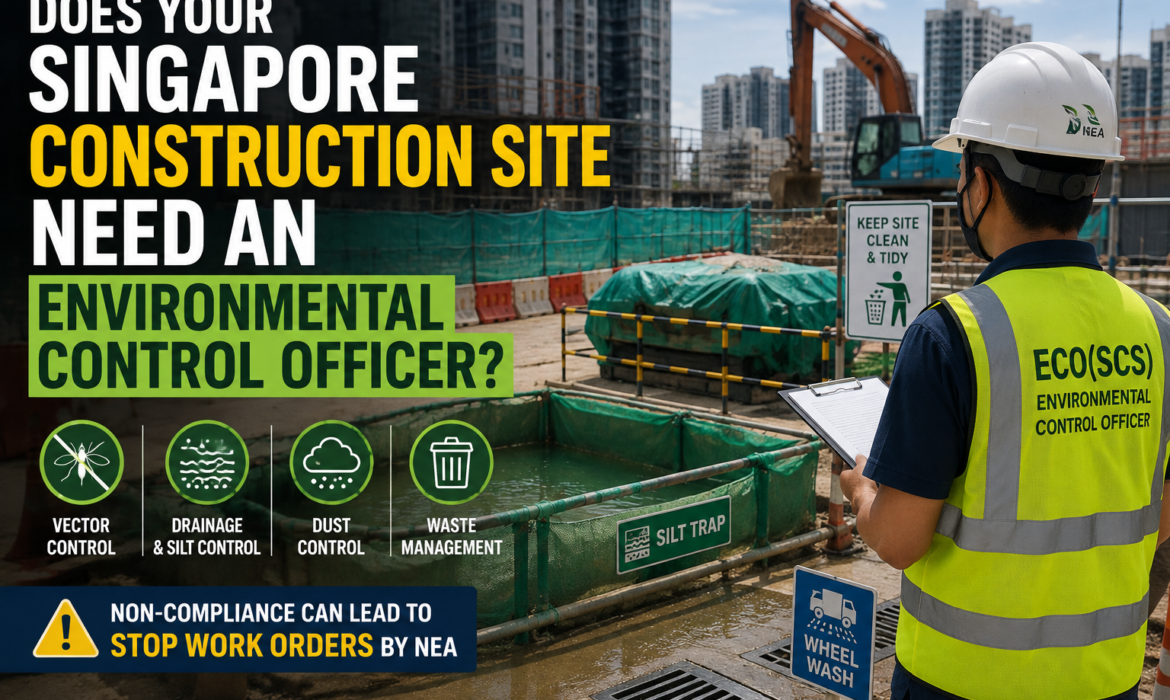
Does Your Singapore Construction Site Need an Environmental Control Officer?
Most contractors in Singapore have their MOM appointments mapped out. The safety officer is registered, the risk assessments are filed, the toolbox briefings run on schedule. What many don’t have is a registered Environmental Control Officer. Then a National Environment Agency officer arrives, finds mosquito breeding across several habitats, and issues a Stop Work Order.
Work stops just as completely as it would under an MOM order. The difference is that this one comes from a different agency, under different legislation, for reasons that have nothing to do with your WSH management system. Sites that are genuinely well run on safety still get caught here, because environmental compliance sits under its own appointment and its own regulator.
That appointment is the Environmental Control Officer.
What an Environmental Control Officer is, and which law creates the requirement
The ECO scheme is administered by NEA under the Environmental Public Health Act. Registration and appointment obligations are set out in the Environmental Public Health (Registration of Environmental Control Coordinators and Environmental Control Officers) Regulations 2021.
For construction, the relevant registration is the Environmental Control Officer for Specified Construction Sites, written as ECO(SCS). Its duties are set out in NEA’s Code of Practice for ECO(SCS). This is a registered appointment, not an internal job title. An individual applies to NEA for a Certificate of Registration, and the appointment is only valid once that registration is in place.
The role is preventive by design. An ECO(SCS) watches for conditions on site that create environmental or public health problems, raises them with the occupier, and recommends corrective measures before they escalate into an enforcement matter. Our Environmental Control Officer services page covers how the role is typically deployed on Singapore projects.
When the appointment is triggered
The trigger is contract sum. In a written parliamentary reply on contractors violating environmental laws, the Ministry of Sustainability and the Environment set out that occupiers of specified construction sites with contract sums exceeding $10 million are required to appoint an ECO(SCS).
The required commitment scales with project size. NEA’s Code of Practice defines a part-time ECO as one employed for at least 15 hours per week and a full-time ECO as one employed for at least 40 hours per week, with part-time coverage applying between $10 million and $50 million and full-time coverage above $50 million. Confirm your band against the current Code of Practice before scoping an engagement, because the hours are part of the requirement and not a service preference.
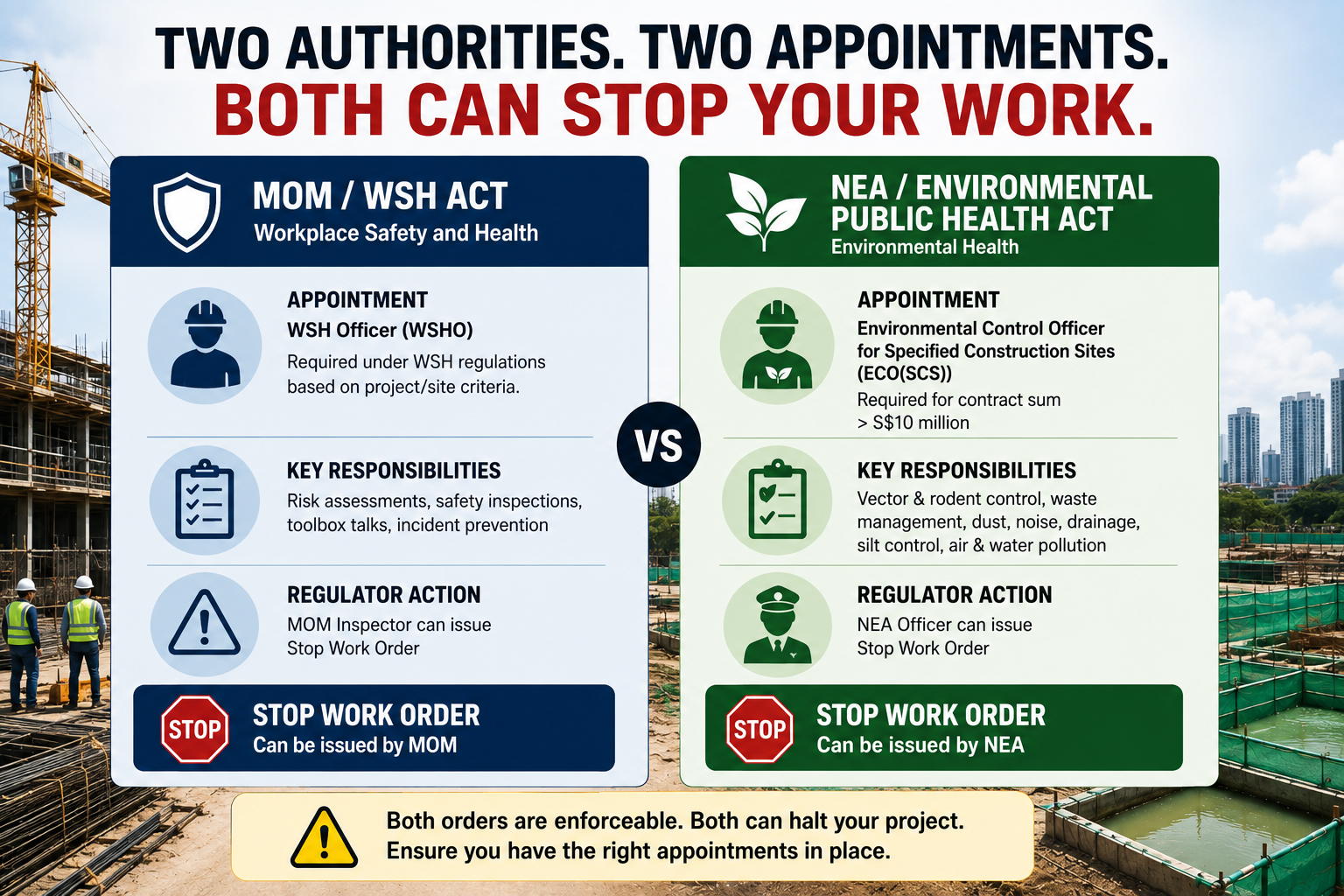
Note that this threshold is completely separate from the contract-sum threshold that triggers a WSH Officer appointment under MOM’s regulations. The two don’t align, and satisfying one does nothing for the other. A project can sit above the ECO threshold and below the WSHO threshold, or the reverse. If you haven’t yet worked out which MOM appointment your project needs, our workplace safety and health officer page covers that side.
Operating a specified construction site without a valid ECO where one is required is an offence under the Environmental Public Health Act.
What the ECO actually produces
Two documents anchor the role.
The Site Environmental Control Programme (SECP) sets out the environmental management plan for the site before and during works. How the project will handle the environmental risks its own activities create.
The Site Environmental Control Report (SECR) is the recurring record. The ECO prepares and submits it to the occupier of the construction site at least once a month, or at another frequency NEA specifies after works commence. The report must be made available for inspection on demand by the Director-General of Public Health or a Public Health Officer, through the occupier.
Day to day, the scope covers vector and rodent control, solid waste management and disposal, general site housekeeping, NEA construction noise limits and dust control, drainage and silt control, and air and water pollution.
One provision deserves attention from occupiers specifically. The occupier of the construction site is required to take and follow the advice given by the ECO(SCS) in maintaining environmental health standards. This isn’t an advisory role the site team can note and set aside. If your ECO raises an issue and nothing happens, the exposure sits with the occupier.
Why this matters more than contractors expect
The enforcement picture in Singapore isn’t theoretical.
In a written parliamentary reply on dengue prevention, the Ministry of Sustainability and the Environment set out that contractors whose sites are found with mosquito breeding may face a fine of up to S$20,000, imprisonment for up to three months, or both. Repeat offenders face up to S$50,000, up to six months’ imprisonment, or both.
Sites with poor housekeeping and conditions favorable to mosquito breeding may be issued Stop Work Orders, with the site operator required to undertake specified remedial measures. Those measures have to be implemented and verified by NEA before the order is lifted. The site doesn’t restart on the contractor’s timetable.
The volume has moved in the wrong direction over time. The same reply noted that 65 Stop Work Orders had been issued to construction sites as of 13 June 2022, against 43 across the whole of 2021 and 37 in 2020.
For a project under schedule pressure, an environmental Stop Work Order is expensive in a way that’s hard to recover. Preliminaries keep running. Subcontractors sit idle. And the restart depends on an external verification you don’t control. Repeat offences also surface during tender evaluation, which extends the cost well past the project where the lapse occurred.
ECO(SCS), ECO(SP) and ECC are not interchangeable
NEA’s environmental appointments cover more than construction, and the naming causes real confusion.
ECO(SCS) applies to specified construction sites, as described above.
ECO(SP) applies to specified premises under the environmental sanitation regime. Specified premises generally require an Environmental Control Coordinator, while more complex premises require a registered ECO(SP). Shopping malls are among them, designated under the Environmental Public Health (Designation of Specified Premises — Shopping Malls) Order 2022.
ECC, the Environmental Control Coordinator, is the coordinator-level appointment for specified premises, working alongside an ECO(SP) where one is required.
If you operate both a construction project and a commercial premises, these are different registrations with different scopes. One person’s certificate doesn’t automatically cover the other context.
Registration and upkeep
Applications for ECO(SCS) registration go through the GoBusiness licensing portal. An individual can apply with Singpass, and a Corppass account isn’t required for the individual registration itself. NEA’s stated processing time is within 30 working days, which is worth building into your mobilization schedule instead of discovering at the last minute.
Entry requirements are pitched at construction site supervisors. GoBusiness lists the standard as Workplace Literacy and Numeracy Level 7 across all five assessments — reading, listening, speaking, writing and numeracy — or Level 6 across all five together with two years of relevant working experience.
NEA also requires ECO(SCS) applicants to hold a course certificate of performance obtained within the five years preceding the application or renewal date. Anyone searching for an ECO course should confirm the provider is recognized for this purpose before enrolling. Registration isn’t permanent, and lapsed currency is a common reason an appointment stops being valid without anyone noticing.
Running environmental and WSH appointments together
Most contractors already treat safety as a planned function. Environmental compliance tends to get handled reactively, which is why it produces surprises.
A few practical points help.
Confirm the ECO requirement at tender or pre-mobilization, not after work starts. The registration lead time alone makes late appointment difficult. Check whether your project needs part-time or full-time coverage before you scope the engagement, since the hours commitment is part of the requirement and not a service preference.
Give the ECO a route to get things fixed. The regulations require the occupier to follow the ECO’s advice, so there should be a named person who receives SECR findings and owns closure. An ECO producing monthly reports nobody actions is a compliance record of unaddressed problems.
Fold environmental checks into the same site walk as safety inspections where it makes sense. Water ponding, blocked drainage, sagging tarpaulins and poor housekeeping show up on a WSH inspection anyway, and it’s the same ground a toolbox safety briefing already covers. The distinction is that under the environmental regime they carry their own penalties and their own Stop Work Order risk.
Frequently asked questions
Is an ECO the same as a WSH Officer? No. A WSH Officer is registered with MOM under the Workplace Safety and Health framework. An ECO is registered with NEA under the Environmental Public Health Act. They cover different risks, have different appointment triggers, and are enforced by different agencies. Sites frequently need both.
Can our WSHO also act as our ECO? Only if that individual separately holds valid ECO(SCS) registration. Holding one appointment doesn’t confer the other. Whether one person can carry both on a given project also depends on the required hours commitment for each.
Can an ECO be part-time? For mid-sized projects, part-time appointment with a minimum weekly hours commitment is the expected arrangement. Larger projects require full-time coverage. Confirm which band your contract sum falls into before engaging.
What happens if NEA issues a Stop Work Order for mosquito breeding? Work halts, and the site operator must carry out specified remedial measures. NEA has to verify those measures before the order is lifted, so the restart timing isn’t within the contractor’s control.
How long does ECO registration take? NEA’s stated processing time is within 30 working days for an ECO(SCS) Certificate of Registration. Plan for this in your mobilization timeline.
Do shopping malls and commercial premises need an ECO? Under the environmental sanitation regime, specified premises generally require an Environmental Control Coordinator, while more complex premises such as designated shopping malls require a registered ECO(SP). That’s a different registration from the construction-site ECO(SCS).
Get the appointment in place before mobilization
The pattern behind most environmental enforcement on Singapore sites isn’t indifference. It’s sequencing. The requirement gets confirmed after the site is already active, the registration takes time, and the gap between mobilization and appointment is exactly when housekeeping standards slip.
ProSkill Workforce Pte Ltd places Environmental Control Officers alongside WSH professionals for construction and industrial projects in Singapore, with WSH consultancy covering risk assessments, safety audits and incident investigation where a project needs both sides covered by one partner.
Related reading: Workplace safety and health officer services · Construction manpower outsourcing in Singapore · WSH risk assessment services
Tell us your contract sum, project duration and site type, and we’ll tell you which appointments apply and what coverage level the project needs. Call +65 9090 0468 or email inquiry@proskillworkforce.com.
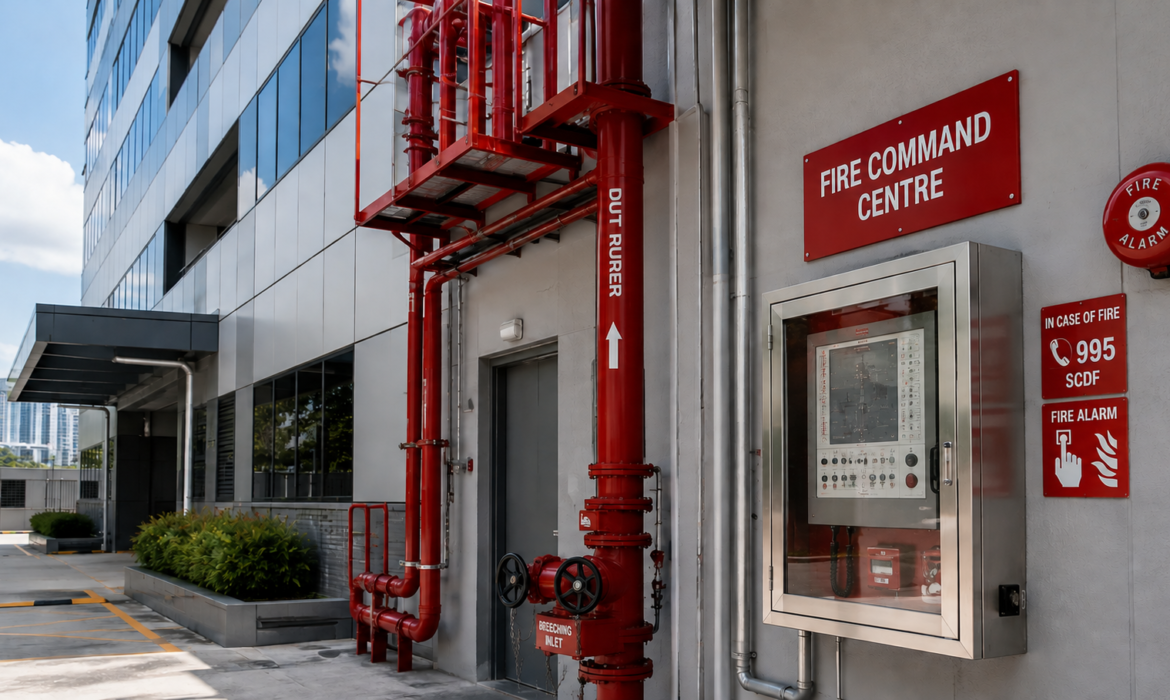
Singapore’s Three-Year Fire Certificate: What Actually Changed on 1 April 2026
If you manage a building that needs a Fire Certificate, your renewal paperwork just got lighter. Your inspection obligations did not.
From 1 April 2026, the Singapore Civil Defence Force extended FC validity from one year to three, for buildings that require a certificate and have a good compliance track record. Renewal applications and fee payments now happen once every three years instead of annually. For owners and managing agents who were running the same submission cycle every twelve months, that’s a real cut in administrative load.
The risk sits in what the change didn’t touch. You still need a Professional Engineer to inspect your fire safety systems every year, and you still need to submit an FC form certifying those systems are in good working condition. Read the headline and stop there, and the first gap won’t surface until an annual submission is already overdue.
Who needs a Fire Certificate in the first place
Under Section 35 of the Fire Safety Act 1993, the owner or occupier of a public building meeting the specified criteria must apply for and hold a Fire Certificate. The criteria sit on SCDF’s Fire Certificate page. Public buildings here include offices, hospitals, shopping complexes, industrial buildings and private residential buildings.
The main trigger is occupant load. A public building other than a residential building with an occupant load of more than 200 persons falls within scope. There are carve-outs for serviced apartments with external corridors and standalone carparks that comply with Chapter 2 of the Fire Code, and for hawker centres or wet markets not fully enclosed on all sides. Separate criteria catch industrial buildings, foreign dormitories, hospitals, taller residential buildings and engineered timber buildings, so read the full list rather than assuming the 200-person trigger is the only one.
For a new building, the initial application goes in within twelve months after obtaining the Certificate of Statutory Completion or Temporary Occupation Permit. The scheme exists to confirm that fire safety systems are being properly maintained and tested against the relevant codes of practice. It isn’t a check that they were installed correctly at handover. If you need help preparing or lodging the submission, we cover that on our Fire Certificate application assistance page.
What the three-year regime changed
Three things moved on 1 April 2026.
Certificates issued or renewed with a validity start date from 1 April 2026 onward now run for 36 months, unless otherwise stated.
Renewal applications, fee payment included, go in once every three years. The submission deadline itself didn’t move. Applications must reach SCDF at least two months before the existing certificate expires.
Revised fees apply from the same date and are payable once every three years. Per SCDF’s circular on the three-year FC regime, the application fees become S$11 per storey for residential buildings and S$36 per storey for non-residential buildings, against the previous $11 and $33 charged annually. SCDF puts the saving at roughly two-thirds a year for compliant owners.
One qualifier is easy to miss. SCDF extended the validity period for buildings that require an FC and which have a good compliance track record. It isn’t unconditional. If your FC expires or is revoked because of a late or incomplete submission, SCDF places the premises back on a one-year regime until consistent compliance is demonstrated.
What did not change: the annual PE inspection
This is the part worth repeating to whoever in your organization handles compliance dates.
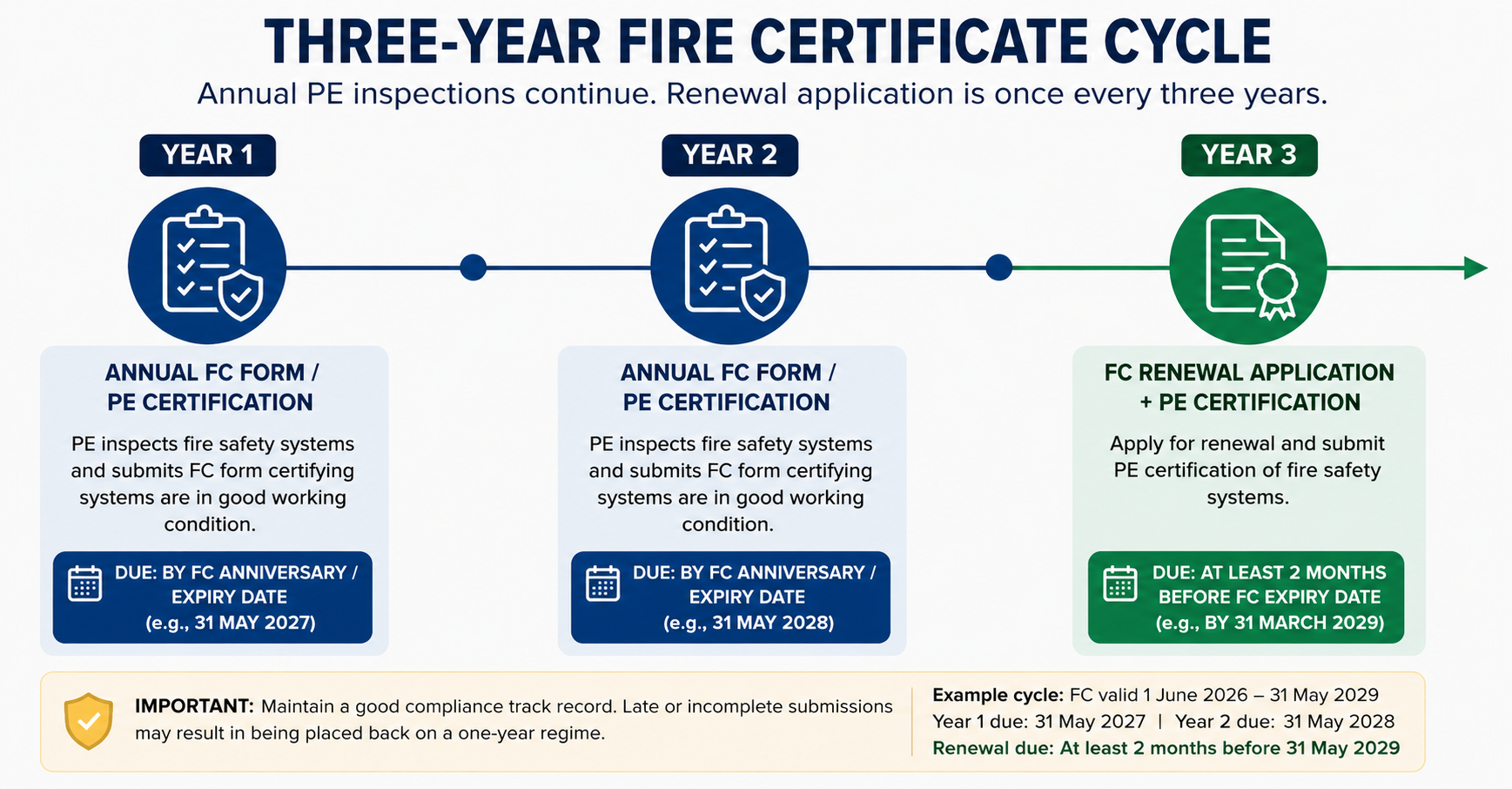
You must continue to engage a Professional Engineer, as necessary, to conduct annual inspections of the building’s fire safety systems and to submit the FC form certifying those systems are in good working condition. SCDF’s stated reason is straightforward. Mechanical and electrical systems deteriorate over time, so a three-year gap between physical checks would leave real risk unmanaged.
Here’s what a three-year cycle now looks like in practice. Say your certificate carries a 31 May expiry. You submit your first annual FC form by 31 May of year one. Second annual FC form by 31 May of year two. Then apply for renewal with PE certification at least two months before your 31 May expiry in year three. The cycle repeats.
Two of those three years involve a submission that isn’t a renewal. That’s precisely the kind of obligation that gets dropped when a building changes managing agents, when the person who held the calendar leaves, or when someone assumes a three-year certificate means a three-year gap in everything.
SCDF has said it will keep conducting random audits on PE inspections throughout the validity period, including in years when the FC isn’t due for renewal, and buildings must continue submitting PE inspection dates on request. If your inspection records are incomplete when that request arrives, the shortfall becomes visible immediately. Scheduled fire safety inspection support is the usual way owners keep that record continuous.
Two further points from SCDF’s FAQ are worth knowing before you rely on the lighter cycle. Missing an FC form deadline in a non-renewal year results in SCDF revoking the FC with immediate effect and initiating enforcement action, which can include fines and court prosecution. On the other side, SCDF has said it will send reminder notices four months ahead of each annual FC Form deadline, though it stresses that compliance remains the owner’s responsibility whether or not the reminder arrives.
Where building owners tend to get caught
A few failure patterns recur across Singapore premises.
Treating the certificate date as the only date. The renewal is now the least frequent event in the cycle. It’s the annual FC form submissions that will trip owners up between 2027 and 2029, and missing one costs you the certificate outright.
Leaving rectification too late. Applications must go in at least two months before expiry. If a PE inspection surfaces deviations, those need rectifying before the submission, not after. Working backward from the deadline, the inspection needs to happen well before the two-month mark, not against it.
Assuming an FSC covers you. A Fire Safety Certificate certifies that a building’s fire safety provisions comply with the Fire Code, and it’s typically issued once for a new or renovated building. A Fire Certificate covers the ongoing maintenance of fire safety measures in qualifying premises and gets renewed periodically. Some premises need both. Our page on FSM and FSC services explains where the two sit relative to each other.
Losing continuity at handover. When a managing agent changes or a facilities lead resigns, the inspection schedule, PE engagement, prior FC forms and any outstanding deviation records need to transfer cleanly. They often don’t.
Changing the use of a space without revisiting fire safety provisions. Converting a warehouse to F&B, or a retail unit to a childcare centre, changes the fire risk profile and may change what’s required of the premises.
Building a cycle that survives staff turnover
The administrative relief here is genuine. It only holds if the annual obligations are owned by someone specific.
Set the annual PE inspection as a fixed recurring commitment, not something triggered by an approaching certificate expiry. Book it early enough in the year that any rectification work has room to complete before the FC form is due. Keep the inspection reports, FC form submissions and maintenance records for fire protection systems in one place that survives a change of personnel, because SCDF may ask for the inspection schedule at any point. A fire safety audit checklist is a reasonable backbone for that record.
For premises that also fall under Workplace Safety and Health obligations, it helps to run fire safety alongside the rest of the compliance calendar instead of as a separate track. Emergency response planning, evacuation drills, and routine inspections of escape routes, fire doors and extinguishers all sit adjacent to the FC cycle, and the same people are usually involved in both. If you’re not certain which WSH appointments your premises requires alongside its fire obligations, our page on WSH coordinator services works through where the role sits.
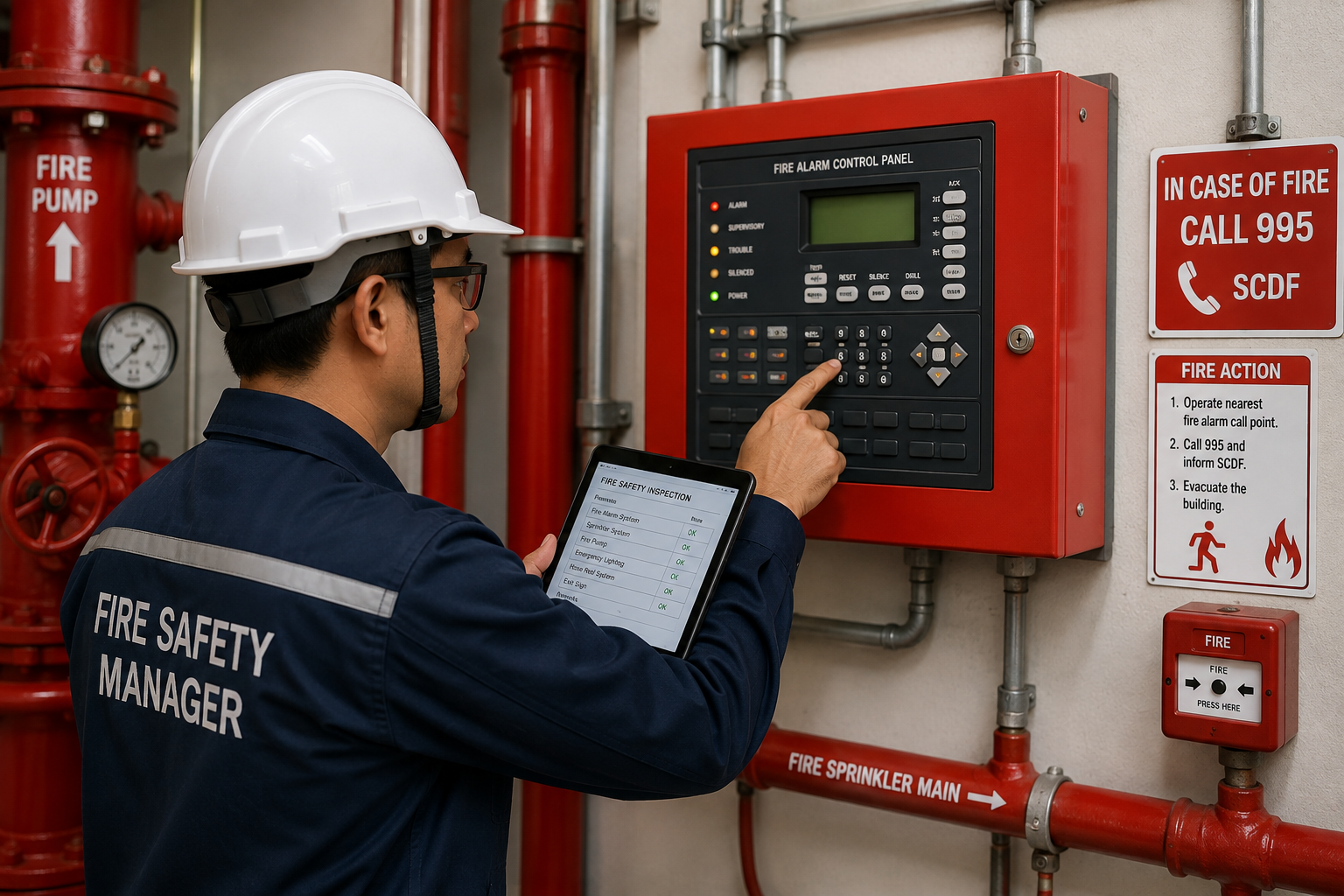
Where a building requires a fire safety manager, that appointment is the natural home for this cycle. An FSM who runs the inspection schedule, tracks defects through to closure and holds the documentation gives you continuity that doesn’t depend on any one employee staying in the role. Whether the role is filled internally or through an outsourced FSM arrangement, the ownership question is the same.
Frequently asked questions
Does the three-year Fire Certificate mean I only inspect every three years? No. Annual Professional Engineer inspections remain mandatory, and an FC form certifying that systems are in good working condition must still be submitted each year. Only the renewal application and fee payment moved to a three-year cycle.
When must a renewal application be submitted? At least two months before the existing Fire Certificate expires. This requirement didn’t change under the new regime.
What does the Fire Certificate cost now? S$11 per storey for residential buildings and S$36 per storey for non-residential, payable once every three years rather than annually. Under the old regime the same storeys cost $11 and $33 every year.
How do I submit an FC application or renewal? Through the GoBusiness licensing portal, which requires Corppass for business users. SCDF publishes submission guidance on its Fire Certificate page.
What is the difference between a Fire Safety Certificate and a Fire Certificate? A Fire Safety Certificate certifies that a building’s fire safety provisions comply with the Fire Code, and it’s typically a one-time certification for new or renovated buildings. A Fire Certificate applies to qualifying premises and certifies that fire safety measures are being properly maintained on an ongoing basis. Some premises require both.
Do I need a Fire Safety Manager if my building holds a Fire Certificate? Not automatically. The FSM requirement is triggered separately by premises type and risk. Our guide to who needs a Fire Safety Manager in Singapore sets out the criteria.
What happens if SCDF selects my premises for audit? SCDF notifies the owner or occupier to submit their PE inspection schedule. Having current inspection records and closed-out deviations at that point is what makes the audit straightforward.
Plan the next two years, not just the next renewal
Buildings that handle this transition well will be the ones setting up their year-one and year-two submissions now, while the change is still recent enough to be front of mind. The ones that struggle will file the renewal, feel relieved, and look at the calendar again in 2029.
ProSkill Workforce Pte Ltd supports Singapore building owners and occupiers with Fire Certificate compliance, Fire Safety Manager placement, fire safety inspections and emergency response planning, alongside broader WSH consultancy for premises managing both fire and workplace safety obligations.
Related reading: Fire Safety Manager services in Singapore · Workplace safety and health officer services · Emergency response plans that work under pressure · Workplace safety consultancy
If you’re not sure where your building sits in the new cycle, send us your certificate expiry date and building type. We’ll map out what’s due and when. Call +65 9090 0468 or email inquiry@proskillworkforce.com.
WSHO or WSH Coordinator? Choosing the Right Safety Appointment for Your Singapore Worksite
A project manager wins a fit-out contract and mobilizes a crew. Two weeks in, the client’s safety team asks who the appointed WSH person is. The answer needs to be immediate and it needs to be right.
Appointing a coordinator where the law expects a registered officer isn’t a paperwork problem. It’s a compliance gap, and it surfaces during an inspection, a bizSAFE audit, or a client prequalification review.
The confusion is understandable. Job ads use the titles loosely. The qualifications overlap on paper. And the requirements shift depending on what kind of workplace you run and how large the contract is. This guide sets out what each appointment actually is, how Singapore employers work out which one applies, and what to check before you put someone’s name on a form.
The three WSH appointments Singapore employers deal with
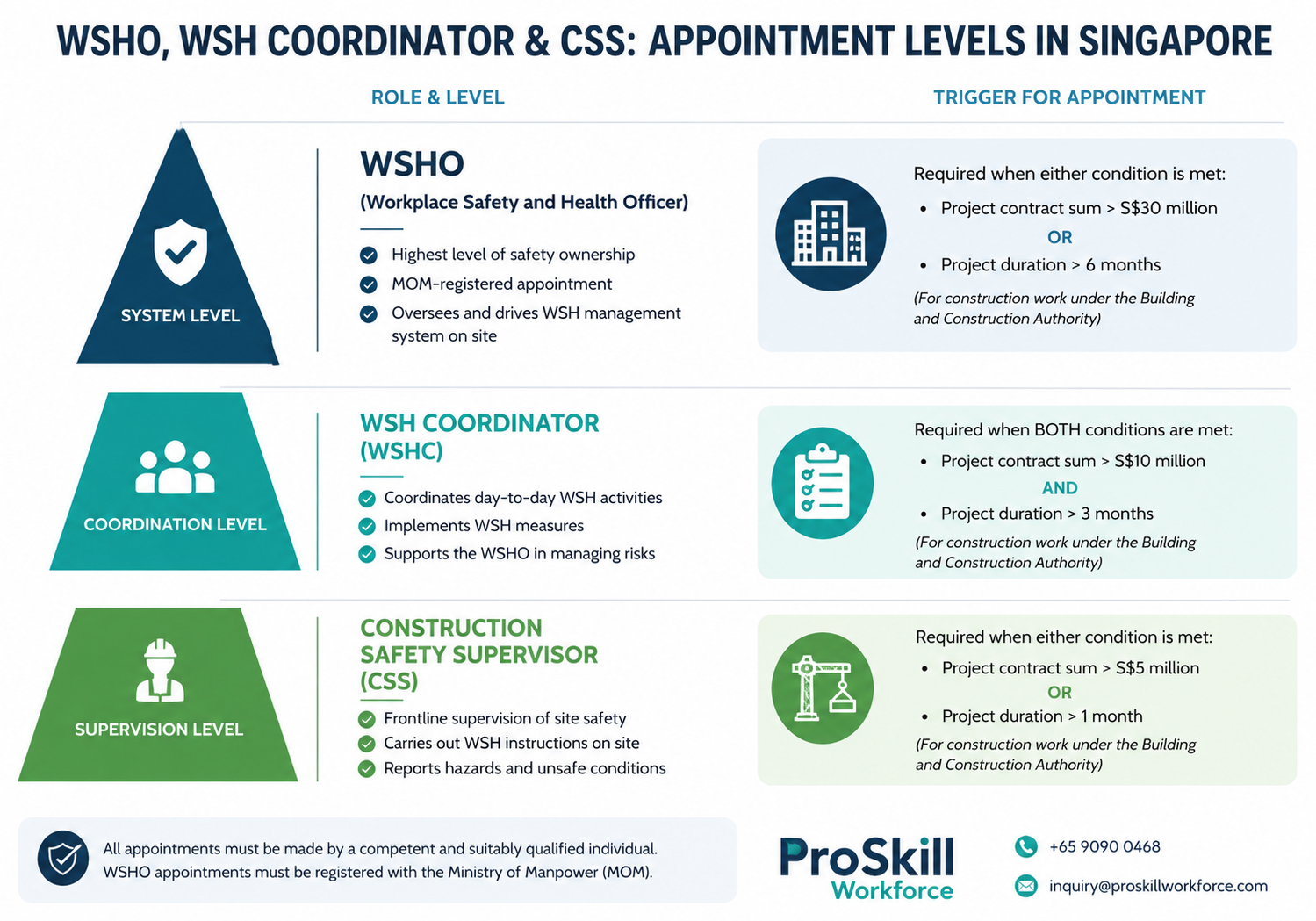
Singapore’s framework is tiered. Each tier has a different scope, a different qualification route, and a different trigger.
Workplace Safety and Health Officer (WSHO)
A WSHO is a competent person registered with the Ministry of Manpower under the Workplace Safety and Health (Workplace Safety and Health Officers) Regulations. Registration is the defining feature. You cannot hand someone the title internally and be done with it.
The role is advisory and systemic. A WSHO advises the occupier on safety matters, runs internal audits and risk assessments, investigates incidents, and acts as the organization’s point of contact with MOM. That last function matters more than employers expect. When an inspector arrives, the WSHO is the person who has to explain the site’s controls and produce the records.
The scope covers the whole safety management system, not individual tasks. So a WSHO needs a working knowledge of the system end to end, plus enough standing to raise issues with management. Employers who need that coverage without a permanent headcount usually look at a part-time WSHO arrangement or engage a WSHO service provider.
Workplace Safety and Health Coordinator (WSHC)
A WSHC supports the coordination and implementation of safety activity at a worksite. The safety coordinator roles and responsibilities are operational: toolbox meetings, site inspections, helping implement the safe work procedures and risk management plan someone else has already developed, and acting as the link between workers, supervisors and the safety team.
The coordinator route is typically associated with smaller construction projects that fall below the contract-sum threshold requiring a registered WSHO. Our page on WSH coordinator services in Singapore sets out how the role is usually scoped and deployed.
Construction Safety Supervisor (CSS)
A CSS is the operational supervisor layer on construction worksites. This is the person watching the work as it happens. Not the person designing the system that governs it.
On a live site the CSS, the coordinator and the officer aren’t alternatives to each other. They sit at different distances from the work face.
How to work out which appointment applies to you
Three variables usually decide it: your sector, your headcount, your contract value.
Shipyards, marine engineering operations, petroleum and petrochemical facilities and bulk chemical manufacturing sit in higher-risk categories, where a registered officer is expected however small the operation feels. General manufacturing and factory workplaces cross the threshold on headcount. Construction projects cross it on contract sum.
Below those thresholds no statutory WSH Officer is required, which is not the same thing as no safety accountability. A competent point of contact is still expected, and bizSAFE Level 3 effectively assumes one exists. Offices and professional-services workplaces land in this space more often than not.
If you’re genuinely unsure where your workplace sits, establish your risk profile through a documented risk assessment first, then map that against the regulations. Our guide to WSH risk assessment services covers what that process involves. Copying a competitor’s org chart is how employers end up under-appointed.
One more thing that catches construction employers. MOM appointments aren’t the only ones your project may trigger. Sites above a certain contract sum must also appoint an Environmental Control Officer registered with NEA, under completely separate legislation. Satisfying your WSH obligations does nothing for that requirement.
Why Singapore SMEs get caught out most often
The national picture is hard to ignore. In his opening address at the bizSAFE Convention, MOM noted that SME employees accounted for about seven in ten fatal and major injuries in 2022, at a time when SMEs employed roughly 70% of Singapore’s workforce. The exposure is proportionate to their share of employment. The resourcing rarely is. MOM has acknowledged that building a strong WSH culture is harder for SMEs given constraints on manpower, time and budget.
That resourcing gap is where appointments quietly fail. A small contractor names a competent person, the person leaves, nobody re-appoints. A factory grows past a headcount threshold and nobody revisits the requirement. A project scope expands mid-contract and the original appointment no longer fits the work.
None of these look like problems until something triggers a review.
What non-compliance actually costs
The penalties under the WSH Act are worth reading plainly, because they get misquoted a lot.
For offences where no penalty is expressly provided, MOM sets general penalties at a maximum fine of S$500,000 for a corporate body on first conviction, rising to S$1 million for repeat offenders. For individuals, which includes directors and senior managers, the maximum is S$200,000, up to two years’ imprisonment, or both. That rises to S$400,000 for repeat offenders. No imprisonment term attaches to a corporate body.
Separately, from 1 June 2024, maximum fines for breaches of WSH Act Subsidiary Legislation that could potentially result in death, serious bodily injury or a dangerous occurrence went from S$20,000 to S$50,000. Composition fines doubled to a minimum of S$2,000 per lapse from 14 June 2022. Failing to comply with a Stop Work Order carries a maximum fine of S$500,000, plus another S$20,000 for each day the offence continues.
Full details sit on MOM’s WSH Act liabilities and penalties page.
In-house, part-time or outsourced?
Once you know which appointment you need, the next question is how to resource it.
A permanent in-house hire makes sense when the role is central to continuing operations, when the site is complex enough to need daily presence, or when you want safety knowledge to accumulate internally over years instead of resetting with every project.
Outsourced and part-time arrangements fit a different shape of need. A defined project phase. A site that has just crossed a threshold. A gap left by a resignation. An organization that needs specialist coverage without carrying a senior salary through quiet periods. Both routes are covered on our safety officer outsourcing page.
The trade-off is real and worth naming. Outsourcing buys you continuity of coverage and an independent view. It also puts much more weight on how well the arrangement is defined: site access, authority to raise and escalate issues, reporting lines, and what happens when the assigned person is unavailable. An external officer with no standing to stop unsafe work is not much use to anyone.
Continuity is often what decides it. Internal staff take leave, change roles and resign. Where an appointment is a statutory requirement, a gap in coverage is a gap in compliance, not just a staffing inconvenience.
What to check before you appoint anyone
Before a name goes on a form, work through six things.
Verify registration status directly with MOM for a WSHO role, instead of accepting a certificate at face value. Check sector relevance, because a shipyard, a cleanroom, a logistics hub and a commercial fit-out present very different risks and sector experience shortens the ramp-up considerably. Confirm scope match — has this person actually held the level of responsibility you’re asking for, or only supported someone who did?
Then the three that get skipped. Put authority in writing: what the appointee can halt, who they escalate to, how corrective actions get tracked to closure. Ask about coverage continuity during leave, illness or resignation, and get the answer before you need it. And settle documentation ownership — who maintains inspection records, risk assessments, incident reports and audit evidence.
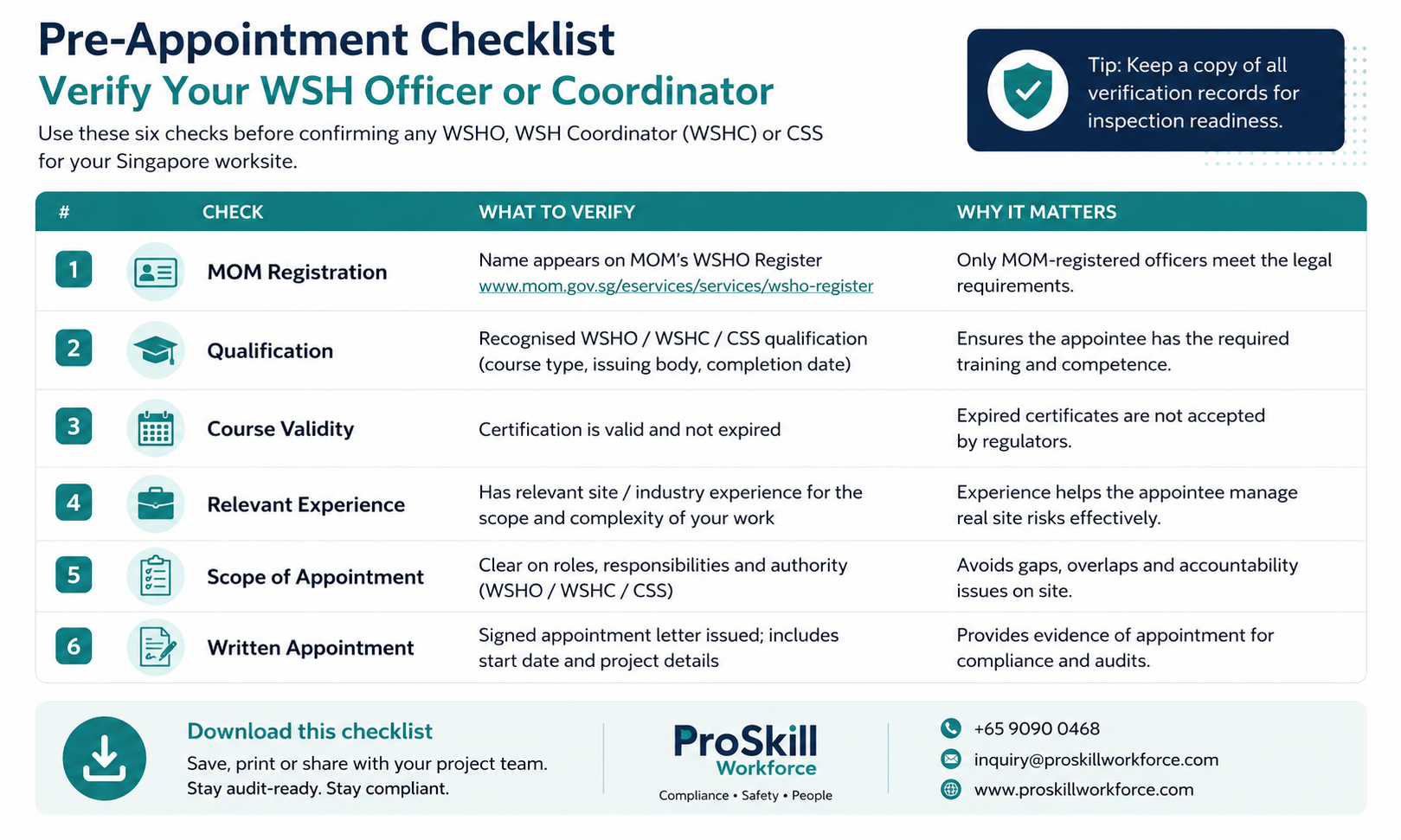
Six checks to complete before appointing a WSH Officer, WSH Coordinator or Construction Safety Supervisor in Singapore.
Frequently asked questions
Does a small office in Singapore need a registered WSH Officer? Usually not. Most professional-services and corporate office environments fall below MOM’s thresholds. A competent safety point of contact is still expected, and bizSAFE Level 3 certification assumes one is in place.
Can one person hold the WSHO appointment for several sites at once? Depends on the sites. Higher-value construction projects are expected to have dedicated resident coverage. Multi-site arrangements generally require approval and get assessed case by case, so check with MOM instead of assuming.
Is an outsourced WSHO acceptable to MOM? Outsourced and part-time arrangements are used across Singapore. Acceptability depends on your workplace classification and whether all the statutory duties are genuinely being discharged: risk management, inspections, incident investigation, records. A named appointment with no real presence doesn’t satisfy the requirement.
What is the difference between a WSHO and a WSHC? A WSHO is registered with MOM and carries system-level responsibility for the safety management system. A WSHC supports day-to-day implementation at site level, and is typically associated with projects below the WSHO contract-sum threshold. They’re not interchangeable.
How often does bizSAFE Level 3 need renewing? MOM states that bizSAFE Level 3 renewal happens every three years. More than half of all construction companies in Singapore hold at least bizSAFE Level 3. Our bizSAFE Level 3 guide walks through the full pathway.
What happens if our appointed officer resigns mid-project? The requirement doesn’t pause. You need replacement coverage in place, and you should expect to explain any gap if an inspection or audit falls in that window. This is easily the most common reason employers move to an outsourced or backed-up arrangement.
Getting the appointment right the first time
Employers who handle this well decide the appointment during project planning, not after mobilization. They establish the requirement before the contract is signed, resource it deliberately, and give the appointee enough authority to be useful.
ProSkill Workforce Pte Ltd places MOM-registered Workplace Safety and Health Officers and supporting WSH personnel across construction, marine, manufacturing, logistics and facilities operations in Singapore, alongside WSH consultancy covering risk assessments, safety audits and incident investigation.
Related reading: Workplace safety consultancy in Singapore · Does your site need an Environmental Control Officer? · Fire Safety Manager services · Work at height: plans, permits and who needs what
If you’re not certain which appointment your worksite requires, tell us the sector, the headcount and the contract scope. We’ll tell you what the requirement looks like and what it would take to cover properly. Call +65 9090 0468 or email inquiry@proskillworkforce.com.

Navigating Compliance: The Ultimate Guide to WSH Consulting Services Singapore
In the modern, high-stakes industrial and commercial sectors of Singapore, safeguarding workplace safety is both a core moral duty and a strict statutory requirement. The Ministry of Manpower (MOM) continuously refines and enforces compliance frameworks under the Workplace Safety and Health (WSH) Act. For progressive enterprises spanning construction, marine engineering, manufacturing, and logistics, keeping pace with these shifting regulatory standards can quickly drain internal resources. This ongoing challenge is precisely why leading corporate organizations rely heavily on professional wsh consulting services singapore.
Proskill Workforce Pte Ltd stands at the absolute forefront of workplace safety architecture, technical risk management, and specialized human resource deployment in Singapore. By combining extensive mastery of MOM regulations with the flexible, outsourced deployment of registered WSH professionals, we ensure your business remains audit-ready, efficient, and thoroughly protected against liabilities. This comprehensive guide covers the critical role of WSH consulting services, details the evolving statutory requirements, and explains how structured risk mitigation directly enhances your bottom line.
The Landscape of Workplace Safety in Singapore
The legal and structural framework governing occupational health and safety in Singapore places the responsibility for hazard mitigation squarely on employers, building occupiers, and principal contractors.
The baseline requirement demands that organizations take all “reasonably practicable” measures to eliminate or minimize mechanical, chemical, biological, physical, and psychosocial risks. In the current enforcement landscape, the stakes have never been higher. The Ministry of Manpower has introduced an updated Safety Accountability, Focus and Empowerment (SAFE) measures alongside an aggressive Demerit Point System for high-risk sectors, making proactive corporate safety oversight a critical strategy.
Core Pillars of Professional WSH Consulting Services
Engaging high-tier wsh consulting services singapore through an accredited partner like Proskill Workforce Pte Ltd adds a multi-layered compliance shield to your day-to-day business operations. Our registered safety consultants do not merely execute a checklist; they implement a comprehensive safety blueprint designed to protect your human assets and minimize your legal liabilities across several essential domains.
1. Implementation of Safety and Health Management Systems (SHMS)
A functional, legally compliant SHMS serves as the structural core of your organization’s safety ecosystem. Our consulting team designs, drafts, and implements customized safety manuals, clear operational charts, and accountability frameworks tailored to align perfectly with Singapore Standard SS651 and global ISO 45001 benchmarks.
2. Comprehensive Risk Assessment (RM) Management
Under the WSH (Risk Management) Regulations, every routine and non-routine activity carried out inside a commercial or industrial facility must be governed by a valid, documented Risk Assessment. Our consulting team guides your technical staff, engineers, and site supervisors through the three structural steps of risk management:
┌──────────────────────────┐     Analytical     ┌──────────────────────────┐     Engineering    ┌──────────────────────────┐
│ 1. Hazard Identification │───────────────────>│    2. Risk Evaluation    │───────────────────>│    3. Risk Control       │
│  (Spotting the Source)   │     Framework      │ (Severity vs Likelihood) │      Controls      │  (Hierarchy of Control)  │
└──────────────────────────┘                    └──────────────────────────┘                    └──────────────────────────┘
3. Progressive bizSAFE Journey Guidance
Achieving a high bizSAFE level is mandatory for participating in government procurement networks and winning major corporate contracts in Singapore. Our consultancy manages this progression from end to end:
- bizSAFE Level 1: Guiding top executives through mandatory safety management orientation.
- bizSAFE Level 2: Training internal risk management champions to construct framework pathways.
- bizSAFE Level 3: Implementing actual risk management control measures on-site to clear mandatory external independent audits.
- bizSAFE Level 4: Upskilling safety coordinators to manage internal audit tracking.
- bizSAFE Star: Aligning your workspace with ISO 45001 standards to achieve the highest level of national safety recognition.
4. Advanced Permit-to-Work (PTW) Routing Schemes
For higher-risk operational activities—such as confined space entry, hot work, heavy lifting, or working at heights exceeding 2 meters—verbal instructions introduce unacceptable risks. We structure clear Safe Work Procedures (SWP) and configure digital Permit-to-Work routing systems. This ensures no hazardous task is started without verified mechanical clearances, energy isolation check-offs, and atmospheric gas testing.
5. Independent Auditing and Incident Forensic Investigation
Unannounced site walks led by external safety consultants are the most effective way to catch hidden hazards before a government inspector arrives. If an unexpected incident or a near-miss occurs, our independent consultancy manages the collection of forensic site data, conducts unbiased staff interviews, maps out detailed root-cause analyses, and coordinates administrative reporting via MOM’s iReport portal within mandatory legal timelines.

Active vs. Passive Safety Frameworks
An elite WSH consultant evaluates an industrial or commercial workplace through a dual engineering lens: Active Safety Controls and Passive Safety Infrastructure. Striking a disciplined balance between these two pillars ensures your workspace remains highly resilient against operational failures.
1. Driving Active Safety Controls
Active safety components rely heavily on continuous human interaction, real-time monitoring, and administrative check-offs to manage operational risks. Our consulting team builds active safety behaviors by:
- Structuring daily, field-specific Toolbox Talks and pre-task safety briefings.
- Implementing behavior-based safety (BBS) monitoring to correct human errors.
- Deploying real-time atmospheric gas detection arrays in chemical storage zones.
- Auditing worker compliance regarding correct personal protective equipment (PPE) use.
2. Reinforcing Passive Safety Infrastructure
Passive safety relies on permanent physical architecture, engineered barriers, and mechanical features that eliminate or isolate hazards automatically, without requiring human action. Our consultants evaluate and reinforce your passive safety framework by:
-
Verifying that heavy production machinery features active emergency interlocks and secure physical Machine Guarding.
-
Inspecting structural edge protections, mid-rails, and perimeter toe-boards on construction scaffolding to prevent drops.
-
Ensuring Lock-Out, Tag-Out (LOTO) mechanical energy isolation blocks remain securely locked out during maintenance cycles.
-
Checking that vertical service shafts and building pipe penetrations are packed with certified intumescent firestop sealants to block smoke migration.
Statutory Staffing Requirements for Singapore Worksites
Many business owners are uncertain about when they are legally required to employ a full-time, registered safety officer versus engaging an external consultancy. The Workplace Safety and Health Act explicitly mandates that certain high-risk industrial environments must maintain certified safety professionals on-site based on financial scale and workforce volume.
The Strategic Advantage of Outsourcing WSH Consulting
Attempting to manage your company’s complex safety portfolio entirely through an internal human resource generalist or an overextended project engineer introduces significant compliance vulnerabilities. Partnering with a dedicated service provider like Proskill Workforce Pte Ltd unlocks several distinct strategic advantages:
Capital Efficiency and Variable Cost Structures
Employing a full-time, permanent senior safety professional in-house brings heavy fixed financial overheads—including competitive base salaries, Central Provident Fund (CPF) contributions, medical insurance allowances, performance bonuses, and continuous skills training subsidies.
Outsourcing your safety requirements with us converts those rigid, permanent commitments into flexible, predictable operational expenditures. You pay exclusively for the exact level of consultancy or contract coverage hours your active project timeline requires.
Seamless Continuity and Talent Security
If an internal safety officer falls ill, takes personal leave, or resigns unexpectedly, your facility can be exposed to immediate compliance risks and potential regulatory stop-work orders.
By partnering with Proskill Workforce Pte Ltd, your business gains access to a resilient organization. If your primary assigned consultant is unavailable, our internal talent network instantly deploys an equally qualified, pre-briefed registered safety professional, ensuring continuous coverage and zero compliance gaps for your operations.
Unbiased Compliance Integrity
Internal safety personnel can sometimes face subtle corporate pressures to overlook minor site infractions or delay expensive equipment upgrades to fit within restrictive departmental budgets. An independent consultant from Proskill Workforce Pte Ltd operates with absolute objectivity. We deliver unbiased, data-driven hazard reports that protect your corporate directors from long-term legal and financial liability.
Why Choose Proskill Workforce Pte Ltd For WSH Consulting Services Singapore?
Selecting the right partner for wsh consulting services singapore is an important decision that directly impacts the structural protection of your assets, the continuity of your operations, and your corporate reputation. Proskill Workforce Pte Ltd has established itself as a premier provider of corporate safety management and technical human resource solutions across Singapore.
- Fully Certified & MOM-Registered Professionals: Every single officer and consultant within our extensive network holds valid, verified credentials from the Ministry of Manpower. We do not use uncertified staff for statutory officer responsibilities.
- Deep Cross-Industry Knowledge: We recognize that an offshore oil platform, a high-purity semiconductor cleanroom, an automated logistics warehouse, and a civil engineering project each possess unique risk characteristics. We match your business with an expert who understands your industry’s exact operational logic.
- Advanced Digital Workflow Integration: Our safety management practices leverage modern technology, utilizing cloud-hosted asset verification logs, digital QR scanning on protective fixtures, and automated site analytics to track risk resolutions transparently.
- Streamlined bizSAFE & ISO Progression: We successfully guide organizations through all stages of Singapore’s national safety certifications, accelerating your company’s path toward bizSAFE Level 3, bizSAFE Star, and ISO 45001 alignment.
- Flexible and Scalable Deployment Models: Whether your business requires a part-time safety consultant for a short-term project audit or an integrated team of resident officers for a mega-scale construction site, our engagement packages are built to scale with your business needs.
Transitioning to a Managed WSH Framework
Onboarding high-tier safety consulting into an active factory setup or a new building development is a structured process. Proskill Workforce Pte Ltd utilizes a systematic, four-phase timeline to transition your project into an organized compliance profile.
Frequently Asked Questions (FAQ)
1. What is the difference between a WSH Consultant and an in-house WSH Officer?
A WSH Officer is an individual registered with MOM who is typically hired full-time by a company to manage day-to-day safety operations on a single site. A WSH Consultant is an external expert or consultancy firm engaged to provide strategic oversight, conduct independent audits, design safety systems, or guide the company through specialized certifications like bizSAFE or ISO 45001.
2. How much does it cost to engage WSH consulting services in Singapore?
The investment varies based on the exact scope of the project. A standard bizSAFE Level 3 consultancy package for a small-to-medium enterprise typically ranges from $1,500 to $3,000. Ongoing, project-based safety management or retaining a part-time safety consultant is typically structured as a predictable monthly retainer based on required site hours.
3. Can our company use the Enterprise Development Grant (EDG) for WSH consultancy?
Yes, eligible companies in Singapore can apply for the Enterprise Development Grant (EDG) administered by Enterprise Singapore. The grant can subsidize a significant portion of qualifying consultancy fees for projects focused on developing comprehensive Safety Management Systems, securing ISO 45001 certification, or implementing advanced safety technologies.
4. What are Continuing Professional Development (CPD) points for WSH professionals?
To maintain an active registration with the Ministry of Manpower, a qualified WSH Officer must participate in the CPD program, accumulating a minimum of 40 Safety Development Units (SDUs) within their two-year validity cycle. Proskill Workforce Pte Ltd handles the continuous education and training tracking for all our deployed specialists, removing this administrative burden from your internal team.
5. What are the mandatory timeframes for reporting workplace accidents via iReport?
Under the WSH (Incident Reporting) Regulations, employers must adhere to strict windows: workplace fatalities must be reported immediately within 24 hours. Dangerous occurrences (such as structural collapses or explosions) and injuries resulting in more than 24 hours of hospitalization or medical leave must be formally submitted within 10 days of the incident.
6. How does Proskill Workforce handle sudden emergency safety gaps on-site?
We maintain a 24/7 technical hotline and support structure. If your site faces an unexpected incident, a sudden MOM inspection, or receives a Stop-Work Order, our senior consulting team can deploy immediately to your location to lead the response, manage communications with regulatory officers, and implement rectification plans to resume operations safely.
Secure Your Corporate Safety Future Today
Workplace safety cannot be handled as an afterthought or treated as a secondary administrative task by an overloaded operations manager. It requires dedicated execution, regulatory precision, and disciplined tracking. By partnering with the wsh consulting services singapore team at Proskill Workforce Pte Ltd, you safeguard your personnel, eliminate regulatory liabilities, and protect your investments.
Contact us today at +65-90900468 or visit our office at [Your Address Here] to discuss how we can elevate your next project.
Call: +65-8833 8400
Read:

The Definitive Guide to Partnering with a Premier WSHO Service Provider Singapore (2026)
In Singapore’s highly monitored industrial and commercial landscape, maintaining occupational safety is an operational necessity and a strict legal mandate. The Ministry of Manpower (MOM) continuously tightens its regulatory enforcement under the Workplace Safety and Health (WSH) Act. For progressive enterprises spanning construction, marine engineering, manufacturing, and logistics, keeping pace with shifting compliance codes can drain valuable internal resources. This operational challenge is why a growing number of corporate boards rely on a professional wsho service provider singapore.
Proskill Workforce Pte Ltd operates at the leading edge of corporate safety management, workplace risk insulation, and technical staffing solutions in Singapore. By combining deep statutory regulatory mastery with flexible, outsourced deployment of MOM-registered Workplace Safety and Health Officers (WSHOs), we ensure your business remains audit-ready, highly efficient, and legally protected. This definitive guide explores how utilizing an expert WSHO service provider safeguards your workforce, fulfills your statutory liabilities, and strengthens your corporate reputation.
What is a WSHO and Why Does Your Workspace Need One?
A Workplace Safety and Health Officer (WSHO) is an elite safety specialist registered directly under the Ministry of Manpower in accordance with the Workplace Safety and Health (Workplace Safety and Health Officers) Regulations. Unlike general human resource managers or site coordinators, a WSHO possesses advanced qualifications in occupational health engineering, hazard analysis, and regulatory law.
Their primary operational mission is the preservation of human life, the prevention of corporate asset damage, and the systematic minimization of systemic operational liability.
Core Statutory Mandates of a Registered WSHO
When you partner with an expert wsho service provider singapore like Proskill Workforce Pte Ltd, the deployed safety professional takes on deep legal and structural responsibilities within your workplace:
- Risk Assessment Management: Leading complex hazard identification processes and formalizing comprehensive Risk Management (RM) structures to comply with the WSH (Risk Management) Regulations.
- Safety Audits and Inspections: Conducting structured walkthroughs to spot structural defects, mechanical hazards, and unsafe behavioral patterns among workers.
- Incident Investigation: Leading root-cause evaluations following near-misses or injuries, compiling detailed incident dossiers, and submitting official reports via MOM’s iReport portal within statutory timelines.
- Policy Formulation: Designing and implementing an integrated Safety and Health Management System (SHMS) customized to the exact workflows of the factory or construction asset.
- Regulatory Liaison: Acting as the designated point of contact for MOM occupational safety inspectors during unannounced spot checks or structural compliance evaluations.
Statutory Thresholds: Who is Legally Required to Appoint a WSHO?
The Workplace Safety and Health Act explicitly dictates which industrial assets must appoint a registered WSHO. This legal requirement is determined by industry sector, contract value, and human workforce scale. Operating inside these designated categories without a formally registered officer can lead to severe judicial penalties, immediate stop-work orders, and corporate disqualification from public tenders.
The Core Technical Focus: Active vs. Passive Workplace Safety
A masterful WSHO service provider analyzes an industrial site through a dual framework: Active Safety Controls and Passive Safety Infrastructure. A balanced application of both domains ensures your workspace remains structurally secure and audit-ready.
                  ┌─────────────────────────────────────────┐
                  │      WSHO OPERATIONAL SAFETY MATRIX     │
                  └────────────────────┬────────────────────┘
                                       │
                ┌──────────────────────┴──────────────────────┐
                ▼                                             ▼
  ┌───────────────────────────┐                 ┌───────────────────────────┐
  │  ACTIVE SAFETY CONTROLS   │                 │ PASSIVE SAFETY STRUCTURE  │
  ├───────────────────────────┤                 ├───────────────────────────┤
  │ • Real-Time ToolBox Talks │                 │ • LOTO Isolation Barriers │
  │ • Gas Detection Audits    │                 │ • Machine Safety Guarding │
  │ • Behavioral Monitoring   │                 │ • Structural Edge Protection│
  │ • Permit-to-Work Routing  │                 │ • Engineered Scaffolding  │
  └───────────────────────────┘                 └───────────────────────────┘
1. Driving Active Safety Controls
Active safety components require human participation, mechanical observation, or administrative permissions to manage operational risk. Your WSHO manages these systems daily by running site-wide Permit-to-Work (PTW) protocols for high-risk tasks like hot work or confined space entry, conducting localized toolbox talks, and performing atmospheric gas checks before teams enter deep storage vessels.
2. Reinforcing Passive Safety Infrastructure
Passive safety relies on physical architecture and engineered boundaries designed to eliminate hazards without requiring continuous human action. Your WSHO checks that heavy processing equipment features functional emergency interlocks and physical machine guards, confirms that structural edge protection and perimeter toe-boards prevent drops on construction towers, and verifies that Lock-Out, Tag-Out (LOTO) energy isolation points remain locked out during maintenance operations.
The Strategic Choice: Direct Permanent Hire vs. Outsourced WSHO Personnel
As corporate boards navigate the financial landscapes of 2026, workforce flexibility is a primary focus. When looking for a wsho service provider singapore, your management team must understand the profound differences between an internal hire and an outsourced contract model.
Engagement Models Comparison
| Operational Feature | Permanent In-House WSHO | Outsourced / Contract WSHO (Proskill) |
| Financial Cost Structure | High fixed costs (salaries, CPF, bonuses, insurance). | Scalable operational expenditure (variable rates). |
| Continuous SDU Tracking | Managed entirely by the individual employee. | Monitored and managed by the service provider. |
| Continuity Protection | High disruption risks during sick leave or resignation. | Zero downtime; immediate replacement deployment. |
| Objectivity and Integrity | Subject to internal department budget pressures. | Unbiased, independent hazard reporting. |
| Recruitment Lead Time | 4 to 12 weeks of active market sourcing. | 48 to 72 hours via pre-vetted talent pools. |

Digital Transformation in 2026 WSH Compliance
The year 2026 has brought significant technological advancements to industrial safety tracking. Traditional paper-based risk logs and faded site checklists introduce tracking errors and storage challenges. A modern wsho service provider singapore leverages an integrated digital tech stack to provide clear visibility into your compliance profile.
1. IoT-Enabled Asset Auditing and QR Tracking
By attaching unique QR codes or RFID tags to every critical safety asset—such as personal fall-arrest harnesses, gas detectors, and fire protection equipment—the verification workflow becomes automated. During inspection walks, the WSHO scans the tag with a mobile app, instantly updating a cloud database with time-stamped inspection records. This provides real-time verification to business owners that physical inspections were successfully completed.
2. SnapSAFE Integration and Live Analytics
Modern safety deployment integrates site cameras and portable monitoring tech with AI-driven hazard detection software. If an unmonitored material pathway becomes blocked or a worker enters a heavy vehicle zone without their high-visibility gear, the platform sends an automated alert to the WSHO’s system, allowing for rapid containment before a risk turns into an emergency.
Transitional Management: Navigating the Onboarding Process
Onboarding high-tier safety leadership into an active factory setup or a new building development is a structured process. Proskill Workforce Pte Ltd utilizes a systematic, four-phase methodology to transition your project into an organized compliance profile.

Why Choose Proskill Workforce Pte Ltd As A WSHO Service Provider Singapore?
Selecting the right recruitment and safety consulting partner is essential to protecting your real estate assets, ensuring continuous operations, and fulfilling your corporate duty of care. Proskill Workforce Pte Ltd is a premier wsho service provider singapore, delivering reliable human resource management and workplace safety solutions:
- Fully Certified & MOM-Registered Professionals: Every candidate within our extensive network holds a valid, verified registration card from the Ministry of Manpower. We do not use uncertified coordinators for statutory officer duties.
- Deep Cross-Industry Knowledge: We understand that a high-purity wafer fabrication cleanroom, a maritime shipyard, a dense logistics center, and a heavy engineering project each have unique operational risks. We match your business with an expert who understands your specific industry logic.
- A Comprehensive Management Strategy: We look beyond simple checklist box-ticking. We review your entire safety profile, addressing mechanical systems, legal compliance frameworks, and human emergency response readiness.
- Innovative Digital Compliance Tools: Our 2026 workflows incorporate modern technological advancements, utilizing cloud dashboards, automated asset logs, and mobile tracking apps to deliver precise data analytics after every inspection.
- Reliable Support Continuity: If your assigned consultant or WSHO takes leave or travels, our extensive internal team ensures an equally qualified professional is deployed instantly, maintaining consistent coverage and zero compliance drops for your facility.
- Cost-Efficient, Flexible Packages: We build clear service level agreements (SLAs) tailored precisely to your building’s classification, helping you optimize operational costs while maintaining world-class safety standards.
Frequently Asked Questions (FAQ)
1. What is the difference between a WSH Coordinator and a WSH Officer in Singapore?
A WSH Coordinator is typically required for smaller construction projects (contract values under S$10 million) and holds basic certifications like the Advanced Certificate in WSH. A WSH Officer (WSHO) is an advanced specialist required for projects exceeding S$10 million or factories with 100+ workers. They must hold a Specialist Diploma in WSH and pass rigorous registration evaluations led by the Ministry of Manpower.
2. How do WSHOs maintain their active MOM registration in 2026?
To remain active and eligible for biennial license renewals, a registered WSHO must participate in the Continuing Professional Development (CPD) program. They are required to accumulate a minimum of 40 Safety Development Units (SDUs) within their two-year validity cycle by attending accredited courses, contributing to technical safety articles, or participating in professional safety boards.
3. Can an outsourced or part-time WSHO manage our industrial workplace?
Part-time or outsourced WSHO arrangements are legally acceptable for certain factory setups with lower risk classifications or smaller workforces, provided all statutory risk management, incident investigation, and inspection tasks are performed completely. However, construction projects exceeding S$10 million require a full-time, dedicated resident officer on-site.
4. What is the standard timeline for Proskill Workforce to deploy a registered WSHO to our asset?
Following our initial workspace evaluation and the confirmation of the service contract, we can complete our internal matching process, initiate the formal MOM appointment registration, and deploy your primary WSHO professional within 3 to 7 business days.
5. Can a single WSHO manage multiple separate construction projects simultaneously?
Under standard MOM guidelines, a full-time WSHO must be dedicated entirely to one construction project if the contract value exceeds S$10 million. Managing multiple adjacent sites requires explicit approvals from regulatory authorities, which are typically granted only under strict distance and risk-sharing criteria.
Secure Your Corporate Safety Architecture Today
Occupational safety cannot be managed as an afterthought or handled as a secondary task by an overloaded operations manager. It requires specialized execution, deep regulatory knowledge, and constant, disciplined tracking. By choosing to partner with a premier wsho service provider singapore like Proskill Workforce Pte Ltd, you insulate your organization from legal liability, optimize your operational expenses, and provide a secure, world-class environment for your staff and tenants.
Contact us today at +65-90900468 or visit our office at [Your Address Here] to discuss how we can elevate your next project.
Call: +65-8833 8400
Read: