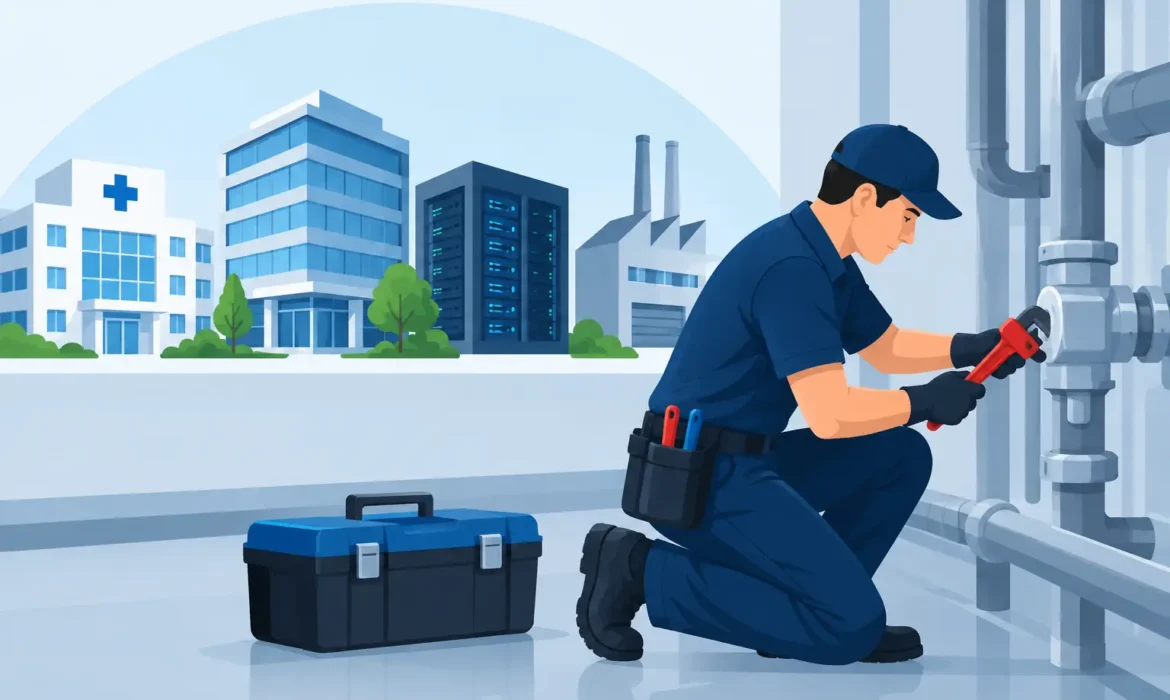
A failed water line in a production area, a blocked sanitary stack in an occupied office, or a leaking pump room fitting can quickly become more than a maintenance issue. It can interrupt operations, damage finishes and equipment, create slip hazards, affect tenant confidence, and place extra pressure on site teams. Professional plumbing services give commercial and industrial facilities a reliable way to respond quickly while reducing the likelihood of repeat failures.
For facility managers, project directors, and operations leaders, the objective is not simply to find a plumber when something breaks. It is to secure a capable partner that understands how plumbing systems affect safety, productivity, compliance, and business continuity.
What Commercial Plumbing Services Should Cover
Commercial plumbing has different demands from residential work. Systems are often larger, more interconnected, and subject to heavier daily usage. A service provider may need to work around active tenants, sensitive equipment, production schedules, controlled-access areas, or shutdown windows. The right scope should be customized to the building, site conditions, and operational priorities.
Core plumbing work can include leak detection and repair, replacement of damaged pipes and valves, sanitary and drainage repairs, water tank and pump connections, fixture installation, blockage clearing, and testing after repairs. In industrial environments, the work may also involve process-water lines, pump rooms, drainage channels, utility connections, and interfaces with motors or hydraulic systems.
A dependable provider looks beyond the immediate visible problem. A ceiling leak may stem from a failed joint, pressure fluctuation, corroded piping, poor insulation, or a drainage backup elsewhere in the system. Repairing only the symptom can lead to another callout, further disruption, and rising maintenance costs.
Why Response Time Is Only Part of the Decision
Fast emergency response matters, especially when water is approaching electrical equipment, stock, server rooms, or occupied areas. However, speed without control can create new risks. A technician must be able to isolate the correct line, assess the affected area, communicate the likely impact, and complete repairs with appropriate testing and documentation.
For a commercial site, an effective response usually begins with a clear escalation process. The facility team should know who to contact, what information to provide, where shutoff valves are located, and which areas require additional access clearance or safety controls. This preparation can reduce the time between a reported issue and safe containment.
It also helps to distinguish between emergency repair and permanent corrective work. A temporary isolation or patch may be the correct decision during business hours if a full replacement would disrupt critical operations. The provider should then provide a practical recommendation, scope, and schedule for the permanent repair. This approach protects continuity without allowing temporary measures to become long-term liabilities.
Planned Plumbing Maintenance Reduces Disruption
Reactive repairs will always be necessary, but a facility that relies on them alone often pays more over time. Small leaks, aging valves, slow drainage, recurring odors, and irregular pump performance are early indicators that deserve attention before they become urgent failures.
A planned maintenance program should focus on the systems most relevant to the site. In an office building, that may mean washrooms, pantry lines, water heaters, drainage points, and common-area fixtures. In a warehouse or manufacturing setting, the priorities may include industrial drainage, utility pipework, pump systems, external lines, and areas exposed to vibration or corrosive conditions.
Inspection frequency depends on system age, usage, water quality, occupancy levels, and the consequences of failure. A lightly used office floor will not require the same maintenance schedule as a 24-hour facility or an industrial plant. The key is to create a risk-based plan rather than applying a generic checklist to every location.
Warning Signs Worth Investigating Early
Repeated blockages, unexplained increases in water usage, stains around pipe penetrations, fluctuating water pressure, slow drains, and persistent odors should not be treated as isolated inconveniences. Each may point to a developing issue within the wider system.
Similarly, a pump that cycles too frequently or makes unusual noise may need inspection before it fails completely. For sites with critical water supply, drainage, or pumping requirements, the cost of planned intervention is usually far lower than an unplanned shutdown.
Selecting a Plumbing Partner for Complex Facilities
Price is an important consideration, but the lowest quote is not always the most cost-effective choice. An incomplete scope, poor-quality materials, inadequate testing, or repeat attendance can quickly erase an initial saving. Decision-makers should assess the provider’s ability to plan, communicate, and work safely within the constraints of the site.
Relevant experience matters. A contractor familiar with commercial offices may be well suited to tenant improvement work but may not have the same capability for industrial pipework, plant-room repairs, or shutdown activities. Ask whether the team has worked in comparable environments and whether it can coordinate with building management, main contractors, safety personnel, and other trades.
Capability should also include workforce reliability. The provider needs properly skilled personnel available for the task, supported by clear supervision and practical scheduling. For larger projects, businesses benefit from a partner that can scale manpower without sacrificing workmanship or site discipline.
Documentation is another indicator of professional control. Depending on the project, this may include work scopes, risk assessments, method statements, permits, inspection records, test results, material information, and close-out reports. These records support accountability and make future maintenance decisions easier.
Safety and Compliance Must Be Built Into the Work
Plumbing activities can involve confined work areas, hot work, working at height, wet surfaces, electrical interfaces, chemical exposure, and service interruptions. On occupied commercial or industrial sites, the work must be managed with the same discipline applied to other high-impact maintenance activities.
Before work begins, the service team should understand access requirements, isolation procedures, hazards in the immediate area, and emergency arrangements. A repair in a ceiling void may affect sprinkler lines, electrical cabling, or air-conditioning services. A drainage repair may require careful control of hygiene risks and wastewater exposure. Good planning protects both the workforce and the people using the facility.
Compliance requirements vary by jurisdiction, building type, and scope of work. Facility teams should confirm which permits, approvals, inspections, and safety documents apply before the job is mobilized. This is particularly important for projects involving modifications, connections to existing building services, or works performed during a live renovation or reinstatement program.
ProSkill Workforce Pte Ltd supports businesses that need coordinated facilities maintenance, skilled manpower, and workplace safety expertise. For clients managing multiple contractors or time-sensitive works, this combination can help maintain clearer accountability across staffing, technical execution, and site safety requirements.
When Plumbing Work Is Part of a Larger Project
Plumbing services are often connected to broader building works. During an office renovation, a new pantry, washroom layout, or water point may require coordinated work with electrical, mechanical, ceiling, flooring, and finishing trades. During reinstatement, existing fittings and connections may need safe removal, capping, testing, and documentation before handover.
The same applies to industrial maintenance. Pipe replacement may require access equipment, floor hacking, coatings repair, pump alignment, or a planned shutdown. Treating each trade as a separate activity can create scheduling gaps and increase the risk of rework. A coordinated contractor approach makes it easier to sequence tasks, control access, and return the area to operation efficiently.
The best time to involve a plumbing specialist is before the work sequence is fixed. Early site review helps identify concealed services, likely isolation points, material lead times, and access limitations. It also gives the project team a clearer view of cost and duration before disruption begins.
Build Reliability Into the Maintenance Plan
The most valuable plumbing partner is one that helps your team move from constant reaction to controlled maintenance. That means keeping accurate service records, tracking recurring faults, planning replacements at sensible intervals, and ensuring urgent callouts lead to lasting corrective actions.
Facilities cannot always avoid plumbing failures, particularly in aging buildings or high-use environments. They can, however, reduce the impact by choosing qualified plumbing services, defining response procedures, and maintaining systems before minor defects become operational interruptions. A well-managed system lets your people focus on the work that keeps the business moving.