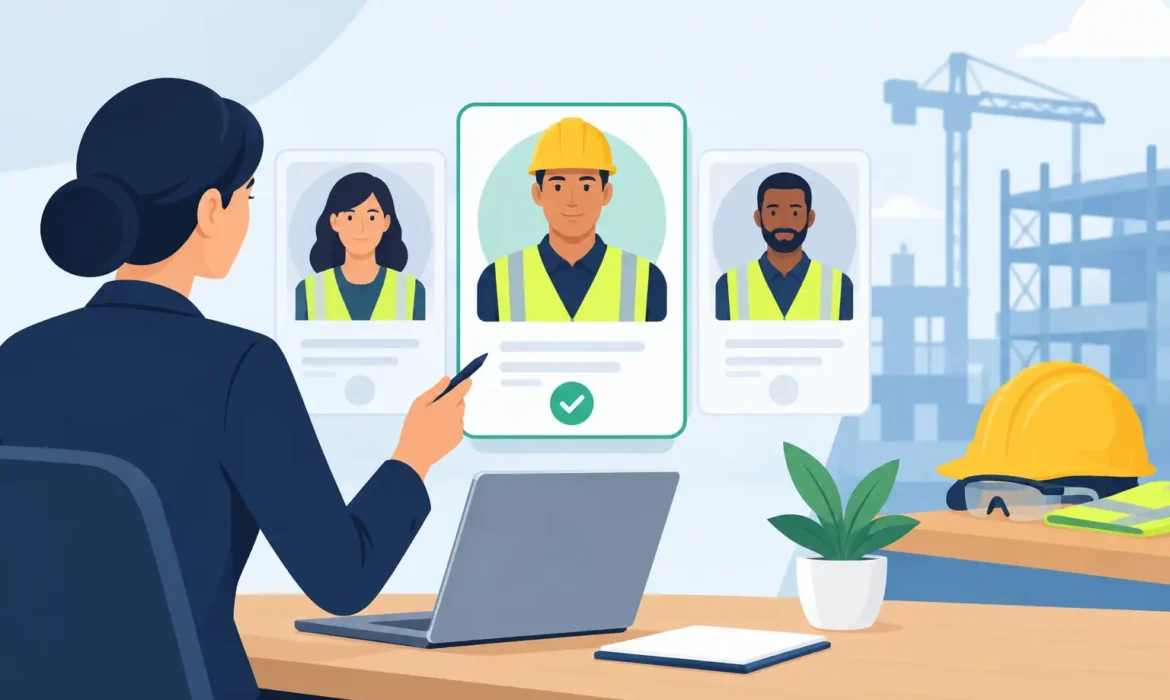
A safety vacancy can look straightforward on paper until a project manager needs someone who can stop unsafe work, guide supervisors through a difficult risk assessment, and keep documentation credible during an inspection. Knowing how to recruit safety professionals means hiring for that real-world authority, not simply filling a role with the right title or a list of certificates.
For construction, engineering, manufacturing, logistics, facilities, and high-risk industrial operations, the right safety hire protects more than compliance. They help maintain productivity, reduce disruption after incidents, support workforce confidence, and give management a clearer view of site risk. The wrong hire can create a costly gap between written procedures and what actually happens on the ground.
Start With the Risk Profile, Not the Job Title
“Safety professional” covers a wide range of responsibilities. A workplace safety coordinator supporting a single renovation project requires a different level of experience from a WSH manager overseeing multiple construction sites, a SHE specialist for a manufacturing plant, or an HSE advisor supporting shutdown work.
Before advertising the role, define the operating environment. Consider the work activities, number of workers, contractor structure, shift pattern, client requirements, incident history, and level of regulatory exposure. A safety practitioner for work at height, lifting operations, confined spaces, hot work, or chemical handling must understand the controls that matter in those settings.
This step also prevents overhiring or underhiring. A small, stable workplace may need a capable coordinator who can manage inspections, toolbox briefings, and records with support from external consultants. A complex project with multiple subcontractors may need an experienced safety manager with the confidence to challenge site leadership and coordinate corrective action quickly.
How to Recruit Safety Professionals With the Right Credentials
Credentials should be treated as a starting point, not the full screening decision. Employers should confirm that candidates hold qualifications required for the role and applicable jurisdiction, along with any site-specific training needed for the work. For Singapore-based operations, this may include relevant WSH qualifications, risk management knowledge, and familiarity with Ministry of Manpower expectations. International projects may require different regulatory knowledge and client-approved certifications.
The more useful question is whether the candidate can apply that knowledge under pressure. Ask them to explain how they would respond to a recurring unsafe act, a serious near miss, or a supervisor who delays a corrective action because of schedule pressure. Strong candidates give structured, practical answers. They identify immediate controls, escalation routes, documentation requirements, communication with affected workers, and follow-up to confirm that the solution is working.
Look closely at the evidence behind the resume. Instead of accepting “conducted audits” or “managed safety compliance,” ask what they found, what they changed, and how the outcome was measured. An experienced professional should be able to describe incidents, inspections, corrective action tracking, permit-to-work processes, emergency drills, and workforce engagement in clear operational terms.
Prioritize Field Credibility and Communication
Safety leadership is partly technical and partly interpersonal. A candidate may be highly knowledgeable but struggle to influence supervisors, workers, contractors, or senior management. That limitation can weaken an otherwise well-designed safety program.
The best safety professionals adjust their communication without weakening the message. On site, they can deliver a focused toolbox talk that workers understand and remember. In a management meeting, they can turn inspection findings into a clear business case for resources, maintenance, training, or process changes. During an incident investigation, they can remain factual, calm, and fair.
Interview for these skills directly. Ask candidates to walk through a toolbox briefing they have delivered, explain a complex control to a nontechnical worker, or describe how they gained cooperation from a resistant contractor. Their answer should show respect for the workforce while making accountability clear.
Cultural fit also matters, although it should not become a vague reason to reject qualified people. In safety recruitment, culture fit means alignment with the organization’s operating discipline. A professional working in a fast-moving construction environment must be comfortable making site rounds, dealing with subcontractors, and escalating concerns promptly. Someone in a corporate or facilities setting may need stronger policy, audit, reporting, and stakeholder-management skills.
Test Judgment With Real Site Scenarios
A structured interview is more reliable than an informal conversation. Use the same role-relevant questions for each shortlisted candidate and score their answers against defined criteria. This makes it easier to compare technical ability, communication, decision-making, and sector experience fairly.
Scenario-based questions are particularly valuable because safety work involves constant judgment. You might ask what a candidate would do if a worker refuses to use required PPE, if a subcontractor repeatedly fails housekeeping inspections, or if a project team wants to proceed before a risk control is fully in place.
Listen for balance. Effective safety professionals do not rely on blanket shutdowns for every issue, nor do they accept uncontrolled risk to keep work moving. They assess severity, establish immediate safeguards, involve the right people, document decisions, and verify closeout. That practical balance supports both worker protection and project delivery.
Reference checks should go beyond confirming employment dates. Speak with former line managers, project leaders, or operations stakeholders where possible. Ask how the candidate performed during an inspection, incident, tight deadline, or disagreement over corrective actions. These conversations often reveal whether the person was trusted as a genuine operational partner.
Build a Recruitment Process That Moves at Project Speed
Good safety candidates are often in demand, especially those with proven experience in construction, oil and gas, renewable energy, manufacturing, and major maintenance work. A slow hiring process can mean losing strong applicants to employers that communicate more clearly and make decisions faster.
Set the approval route, salary range, reporting line, project duration, and interview panel before sourcing begins. Be transparent about whether the role is permanent, project-based, contract, outsourced, or a temporary deployment. Candidates need to understand the site location, working hours, travel expectations, scope of authority, and the resources available to carry out their responsibilities.
Compensation should reflect the risk, accountability, and scarcity of the skill set. However, pay is not the only deciding factor. Capable safety practitioners also look for leadership support, a workable reporting structure, access to training, and confidence that their findings will lead to action. If a business expects one safety officer to manage an unrealistic workload across multiple sites, experienced candidates will recognize the problem quickly.
For urgent manpower needs, a specialist recruitment and workforce partner can shorten the search by identifying professionals whose qualifications and field exposure have already been assessed. ProSkill Workforce combines safety-sector recruitment knowledge with workplace safety consultancy experience, helping employers define role requirements that match the real demands of their projects.
Retain the Safety Professional You Worked Hard to Hire
Recruitment does not end on the employee’s first day. Give the new safety professional a structured introduction to the organization’s risk register, incident records, emergency arrangements, contractor controls, safety management system, and reporting expectations. Early access to this information allows them to identify priorities without spending weeks piecing together the operating picture.
Make their authority visible. Site teams should know who can raise a stop-work concern, who owns corrective action follow-up, and when issues must be escalated to management. Safety professionals need leadership backing when they make evidence-based recommendations that affect schedules or budgets.
Finally, review the role as the project changes. A safety resource that was sufficient during mobilization may not be enough during peak construction, shutdown activity, commissioning, or a period of increased contractor deployment. Adjusting manpower before pressure builds is more cost-effective than responding after an incident, failed audit, or project delay.
The strongest safety hires are not paperwork administrators or site enforcers alone. They are practical leaders who connect risk control with daily operations, earn workforce trust, and help the business deliver work safely when it matters most.