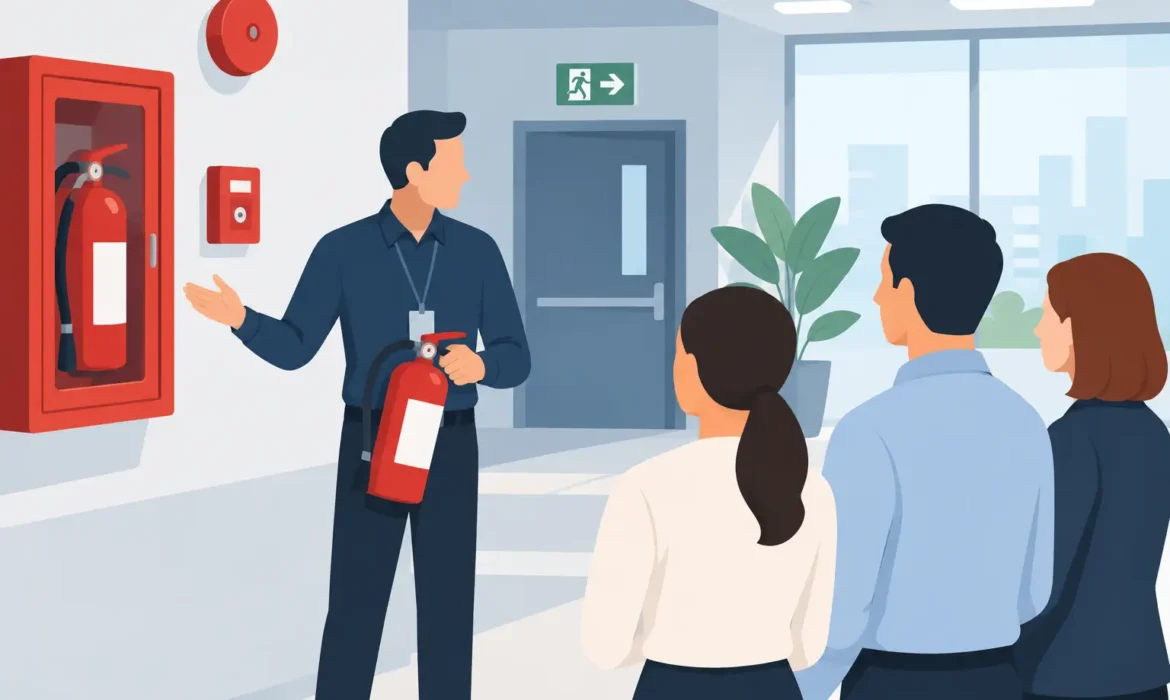
A blocked exit, an expired extinguisher tag, or an unapproved change to a storage area can turn a routine inspection into a serious operational risk. A practical guide to fire safety compliance helps employers identify these gaps before they disrupt a project, jeopardize people, or lead to enforcement action.
For construction sites, industrial facilities, offices, warehouses, and commercial premises, fire safety is not a document that sits in a filing cabinet. It is a working system involving the condition of the premises, the behavior of the workforce, the competence of supervisors, and the readiness of emergency arrangements. The right approach protects lives while supporting reliable, cost-effective operations.
What Fire Safety Compliance Actually Covers
Fire safety compliance means meeting the fire prevention, protection, and emergency preparedness requirements that apply to your facility, work activity, and jurisdiction. The exact rules vary by location, building use, occupancy, and industry. A high-rise office, a chemical store, a construction project, and a manufacturing plant will not carry the same level of risk or the same controls.
Still, most compliance programs rest on the same foundation: identify fire hazards, assess who may be exposed, implement suitable controls, maintain protection systems, prepare people to respond, and retain evidence that these actions have been completed.
Employers should avoid treating compliance as a one-time approval exercise. A site that was compliant at handover can develop new risks after a renovation, equipment installation, process change, increase in headcount, or shift in storage practices. Fire safety controls must move with the operation.
Start With a Site-Specific Fire Risk Assessment
A fire risk assessment is the starting point because it connects legal duties to the reality of your workplace. It should examine credible ignition sources, combustible materials, oxygen sources, people at risk, existing precautions, and the effectiveness of evacuation arrangements.
Typical ignition sources include electrical panels, temporary wiring, hot work, cooking equipment, machinery, overloaded extension cords, and vehicles. Combustible loading may come from packaging, paper records, solvents, fuels, wood, textiles, waste, and improperly stored flammable products. In industrial and construction environments, these hazards can change from one work phase to the next.
The assessment should not stop at identifying hazards. It must determine whether the control measures are proportionate. For example, a small office pantry may need routine electrical checks, clear access to an extinguisher, and staff awareness. A welding activity near combustible materials requires a more controlled permit-to-work process, fire watch arrangements, isolation of fuel sources, and post-work monitoring.
Document the assessment, assign actions to named owners, and set realistic completion dates. An open action without an accountable person is not a control.
Review Risk When Work Changes
Risk assessments need review when conditions change, not merely when an annual schedule says so. Trigger points include refurbishment, floor hacking, fit-out works, shutdown activity, changes in occupancy, new machinery, altered storage layouts, or an incident involving smoke, heat, or a near miss.
Contractors deserve particular attention. They may introduce hot work, temporary power, cutting equipment, flammable substances, or unfamiliar work practices. Clear induction requirements and supervision are essential before work begins.
Maintain the Systems That Protect the Building
Fire protection equipment only works if it is suitable, accessible, inspected, and properly maintained. This includes fire alarms, detectors, sprinklers, hose reels, emergency lighting, fire doors, extinguishers, smoke-control systems, and exit signage where applicable.
A common mistake is focusing only on whether equipment is present. A fire extinguisher hidden behind stock, an alarm panel with unresolved faults, or a fire door wedged open provides little real protection. Site inspections should check physical condition as well as availability.
Maintenance intervals should follow applicable regulations, manufacturer requirements, building management rules, and the recommendations of competent service providers. Keep service records, fault reports, test results, and corrective actions organized. During an inspection or audit, clear records demonstrate that management has taken reasonable, ongoing steps to maintain safety.
Fire doors require disciplined attention. They must close and latch properly, remain free of unauthorized modifications, and not be obstructed. On busy sites, damaged closers, missing seals, and doors held open for convenience are frequent issues. These small defects can have major consequences if fire or smoke spreads.
Keep Escape Routes Clear and Usable
Evacuation routes must work under pressure, in reduced visibility, and for everyone who may be in the building. That includes employees, visitors, contractors, delivery personnel, and individuals who may need assistance to evacuate.
Routes and exits should be clearly identified, adequately lit, unobstructed, and capable of handling the expected number of occupants. Storage in corridors, locked exits, poor housekeeping, and temporary construction barriers are common failures because they often develop gradually during normal operations.
Managers should inspect escape routes as part of routine workplace checks rather than waiting for a scheduled fire audit. If a route changes because of renovation or site works, communicate the new arrangement immediately and update signs, maps, and briefings as needed.
For larger or more complex locations, establish personal emergency evacuation plans for workers or visitors who may require assistance. A plan must be practical for the premises and shift pattern, not a generic statement copied from another site.
Train People for the Role They Actually Have
The best technical systems can be undermined by a workforce that does not know what to do when an alarm sounds. Every worker should understand the alarm signal, nearest safe exit, assembly location, reporting process, and the instruction not to re-enter until authorized.
Training should be relevant to job exposure. Office staff may need evacuation awareness and basic fire prevention knowledge. Facilities teams, security personnel, fire wardens, supervisors, and workers performing higher-risk activities need more detailed instruction. Fire wardens should understand sweep procedures, communication responsibilities, and the limits of their role. They are not expected to place themselves in danger.
Toolbox briefings are especially effective on construction and industrial sites because they can address current conditions: hot work planned for the shift, temporary route changes, poor waste control, or flammable-material storage. Short, targeted reminders are often more useful than repeating a broad annual presentation.
Training records should show who attended, what was covered, who delivered it, and whether any competency checks were completed. This is particularly valuable when managing outsourced personnel, rotating crews, or multilingual workforces.
Test Your Emergency Plan Before You Need It
An emergency response plan should explain how alarms are raised, who contacts emergency services, how evacuation is managed, where people assemble, how attendance is checked, and who communicates with building management or responding authorities.
A drill tests whether that plan works in real conditions. It can reveal problems that are invisible on paper: workers using the wrong exit, wardens unable to account for contractors, an assembly area too close to vehicle movement, or a supervisor who does not know how to report a missing person.
After every drill, record the outcome and correct the gaps. Do not judge a drill only by evacuation time. A slightly slower but orderly evacuation with accurate accountability may be safer than a rushed exit where people are unaccounted for.
Control High-Risk Activities and Contractors
Some activities require tighter fire controls because the potential for ignition is immediate. Hot work, confined-space work, fuel transfer, battery charging, grinding, welding, cutting, painting, and solvent use should be managed through task-specific risk assessments and permit systems where required.
Before authorizing hot work, confirm that combustibles have been removed or protected, firefighting equipment is available, gas cylinders are handled safely, and a competent fire watch has been assigned. The control period should continue after the work ends because smoldering materials can ignite later.
Contractor management is equally important. Contractors should receive a site induction, understand emergency routes and reporting channels, and comply with site rules before work starts. Their permits, training evidence, and method statements should be checked in proportion to the risk of the task.
Build an Inspection-Ready Compliance Record
A dependable compliance system makes it easy to show what has been done, what remains open, and who is responsible. Keep your fire risk assessments, inspection reports, training records, drill reports, maintenance certificates, permits, emergency plans, and corrective-action logs in a controlled location.
Digital records can improve visibility across several sites, but only if site teams keep them current. A simple, well-maintained register is more useful than an elaborate system filled with outdated files. Review recurring issues at management level. If exits are repeatedly blocked or equipment checks are overdue, the problem may be weak supervision, unclear ownership, or insufficient resources rather than employee carelessness.
For employers managing complex projects or multiple vendors, an experienced safety consultancy can provide independent audits, fire certificate support, emergency planning, documentation, and workforce briefings. ProSkill Workforce combines these services with sector-specific manpower support, helping employers align competent deployment with practical site controls.
A Guide to Fire Safety Compliance That Supports Operations
Strong fire safety performance is not achieved by adding paperwork after work is complete. It comes from planning controls early, assigning clear responsibilities, maintaining the premises, and involving the people who work there every day.
Make fire safety a regular operational conversation between facilities, project, HR, and safety teams. When a worker can report a blocked exit, a supervisor can act quickly on a permit condition, and management can see that corrective actions are closing, compliance becomes a dependable part of how the business operates.