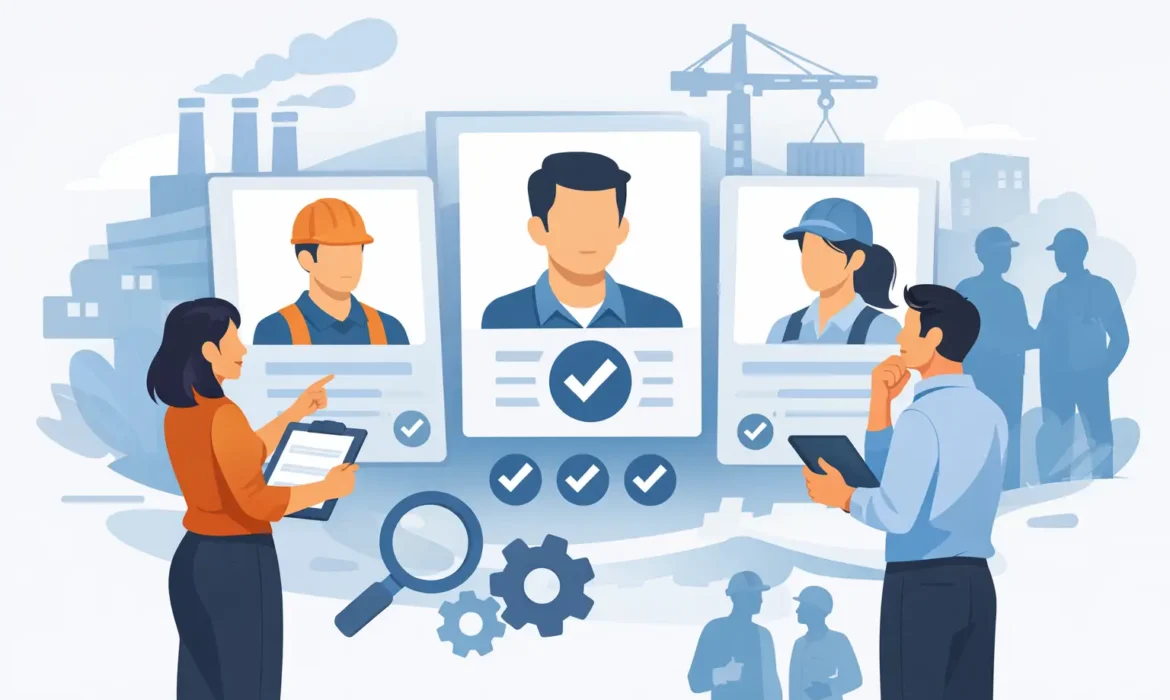
A plant shutdown cannot wait for a lengthy recruitment cycle. Neither can a construction site afford an unqualified worker, a facilities team absorb repeated absenteeism, or an operations manager carry compliance risk because a role was filled in haste. The best industrial staffing partners do more than send resumes. They help employers place capable people into demanding environments while protecting productivity, safety, and project timelines.
For industrial employers, the right staffing relationship is not simply a procurement decision. It affects whether a site can mobilize, whether supervisors can maintain safe manning levels, and whether internal teams can focus on delivery rather than constant replacement hiring. The strongest partner understands the work, the regulations, and the practical reality of running a site.
What the Best Industrial Staffing Partners Deliver
Industrial staffing is different from general recruitment. A job title may look straightforward on paper, but the actual role can require specific equipment experience, site induction readiness, certifications, shift flexibility, physical capability, and the right attitude toward safety procedures.
A reliable partner begins by clarifying the operating requirement. For example, hiring maintenance technicians for a production facility is not the same as sourcing technicians for a short-term turnaround. One employer may need permanent employees who can develop site knowledge over time. Another may need a project-based workforce that can mobilize quickly for shutdown works, fit-out activities, or peak logistics demand.
The best providers translate those operational needs into a practical candidate profile. They ask about the equipment involved, work schedules, reporting lines, required certifications, site hazards, language needs, and expected project duration. This level of detail prevents a common and expensive mistake: filling a vacancy quickly with someone who cannot perform effectively once deployed.
They also maintain realistic expectations. Fast deployment is valuable, but it should not mean skipping reference checks, qualification verification, or an assessment of culture fit. For safety-sensitive work, a rushed placement can create more disruption than a short vacancy.
Look Beyond Candidate Volume
A large candidate database can be useful, especially when an employer needs multiple workers within a short period. But volume is not the same as quality. A staffing partner should be able to explain how it screens people and why a particular candidate is suitable for your role.
Ask how the provider verifies employment history, trade skills, licenses, certifications, and work eligibility. For technical and supervisory positions, ask whether its recruiters understand the difference between related qualifications and genuinely relevant experience. An engineer with design experience may not be the right fit for a site-based commissioning role. A safety professional may hold credentials but lack the confidence or field exposure needed to influence frontline behavior.
Quality matching also includes reliability. Employers should know how the partner evaluates attendance history, shift readiness, communication skills, and willingness to work within site rules. In industries where a missed shift can slow an entire operation, reliability is a core capability, not a soft preference.
Assess Industry and Safety Knowledge
Industrial workforces operate under conditions that demand discipline. Construction, engineering, manufacturing, marine, oil and gas, logistics, and facilities management each carry different hazards, workforce practices, and compliance expectations. A generalist agency may be able to recruit broadly, but a specialist partner brings greater control to risk-sensitive roles.
Look for a provider that understands how workforce decisions intersect with workplace safety and health requirements. This does not mean the staffing firm replaces an employer’s legal responsibilities. It means the partner recognizes that competent deployment, clear documentation, proper induction, and role-specific suitability all support safer operations.
This matters particularly when recruiting WSH, SHE, HSE, quality assurance, facilities, and technical maintenance personnel. These roles often sit at the intersection of operational performance and regulatory compliance. The right candidate needs more than a keyword match. They need the authority, experience, and communication style to work with managers, contractors, and frontline teams.
A partner with safety consultancy experience can provide an additional advantage. It is more likely to recognize when a client needs not only manpower, but also support with risk assessments, toolbox briefings, inspections, incident investigations, emergency planning, or safety-system documentation. This broader perspective helps employers address workforce gaps without treating compliance as an afterthought.
Choose a Staffing Model That Fits the Work
There is no single best staffing model for every employer. The right approach depends on the duration of the need, the scarcity of the skill, the degree of supervision required, and the level of workforce flexibility the organization needs.
Permanent recruitment is often appropriate for core leadership, specialized engineering, corporate support, and long-term operational roles. It gives employers direct ownership of the hiring process and supports continuity, but it requires internal time for interviewing, onboarding, payroll administration, and retention planning.
Outsourced manpower can be a cost-effective option when workforce requirements fluctuate or when a project requires quick scaling. It can reduce administrative pressure and provide greater flexibility, particularly for skilled labor, production support, warehousing, site services, and maintenance activities. However, the employer should be clear about performance expectations, site supervision, escalation processes, and who manages day-to-day deployment.
Project-based staffing is valuable for shutdowns, renovations, commissioning work, temporary production demand, and facilities maintenance programs. Success depends on accurate manpower planning. A partner should help determine not just how many people are needed, but which skills are required at each project stage and what backup coverage is available if manpower needs change.
The best industrial staffing partners are willing to recommend the model that fits the work rather than pushing every client toward the same arrangement.
Questions That Reveal a Dependable Partner
Before engaging a provider, move the conversation beyond rates and headcount. Cost matters, but the lowest quoted rate can become costly if it leads to poor attendance, weak supervision, rework, safety incidents, or repeated replacement requests.
A capable staffing partner should be prepared to answer practical questions about its process:
- How do you verify technical qualifications, certifications, and relevant site experience?
- What is your screening process for reliability, communication, and safety awareness?
- How quickly can you provide shortlisted candidates or mobilize outsourced manpower?
- What support is available if a worker is absent, unsuitable, or needed for an extended shift pattern?
- How do you manage payroll, documentation, attendance, and workforce reporting?
- What industries, roles, and project environments do you support most often?
- Can you assist when staffing requirements overlap with safety, compliance, or facilities needs?
The answers should be specific. Be cautious when a provider promises immediate access to any role without first asking detailed questions about your work environment. A good partner may challenge an unclear brief, recommend adjustments to the job profile, or advise that the requested timeline creates a quality risk. That is usually a sign of professional judgment.
Measure Performance After Deployment
Selection should not end when the worker starts. The strongest staffing relationships improve over time because both parties review what is working and correct issues early.
Set clear measures from the beginning. Depending on the engagement, these may include time to fill, mobilization readiness, attendance, replacement frequency, retention, supervisor feedback, safety observations, productivity, and compliance documentation. For a project workforce, consider whether the partner met the planned ramp-up schedule and maintained adequate coverage through critical milestones.
Regular communication is equally important. A site manager may identify a changing skill requirement before it appears in a formal workforce forecast. A staffing provider that stays close to the operation can respond earlier, whether that means sourcing an additional rigger, replacing a technician, finding a safety coordinator, or adjusting manpower for a maintenance window.
This is where a partnership approach creates value. Over time, the provider learns your site standards, reporting preferences, organizational culture, and recurring workforce needs. That familiarity can shorten hiring cycles while improving candidate fit.
Build Workforce Resilience, Not Just Headcount
Industrial employers face a continuing balance between cost control, workforce availability, technical competence, and compliance discipline. The answer is not always to hire more people. Sometimes the better solution is to redesign a role, use a project-based team, combine recruitment with outsourcing, or bring in specialist safety and facilities support for a defined period.
ProSkill Workforce approaches this challenge as a long-term operational requirement, connecting employers with vetted talent while supporting manpower outsourcing, workplace safety, and facility-related needs. For employers managing complex sites or changing project demands, that combination can reduce the number of separate vendors required to keep work moving.
The most productive next step is to examine the role or project that is creating the greatest pressure right now. Define what success looks like on the ground, identify the technical and safety requirements that cannot be compromised, and choose a partner that can respond with capable people and accountable support. A well-chosen staffing relationship gives your team more than coverage for an open position. It gives the operation a steadier foundation to perform safely and deliver reliably.