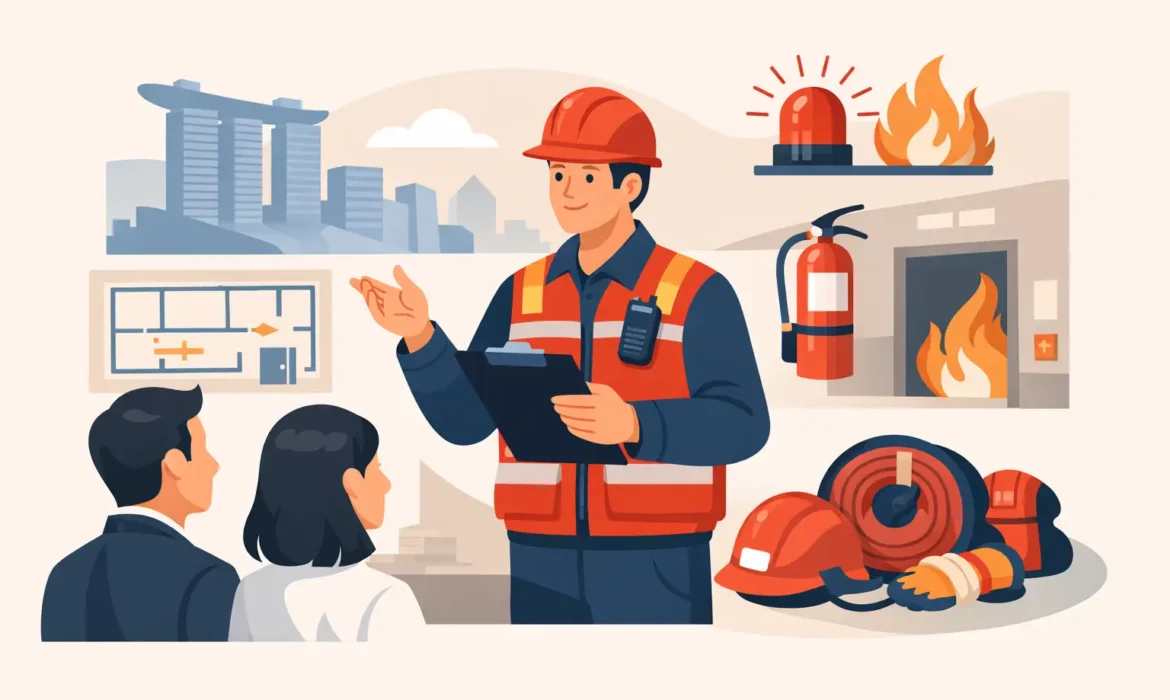
A missed fire drill, incomplete emergency records, or a blocked escape route can quickly become more than a facilities issue. For employers responsible for commercial buildings, industrial sites, warehouses, renovation projects, and high-occupancy premises, fire safety manager services Singapore provide the practical oversight needed to keep people protected and operations compliant.
The right support is not simply about appointing a named person to satisfy a requirement. It is about creating a dependable fire-safety routine that works during normal operations, contractor activities, shift changes, maintenance shutdowns, and a real emergency. That requires technical knowledge, disciplined documentation, and the ability to coordinate building occupants, vendors, management, and emergency response teams.
What Fire Safety Manager Services Cover
A Fire Safety Manager, commonly known as an FSM, supports the person responsible for fire safety at a premises by managing the day-to-day duties that keep fire precautions active and verifiable. The exact scope depends on the building type, occupancy, fire-risk profile, installed systems, and applicable requirements. A warehouse with loading operations and chemical storage will need a different focus from an office tower, retail outlet, healthcare facility, or manufacturing plant.
In practice, fire safety manager services Singapore may include routine inspections of escape routes, fire doors, extinguishers, hose reels, alarm panels, emergency lighting, signage, and fire-engine access. The service can also cover coordination with maintenance contractors, follow-up on defects, fire-safety committee administration, emergency-response planning, drill coordination, staff briefings, and record management.
For employers, the commercial value is clear. A structured FSM arrangement reduces the chance that critical checks are delayed because facilities teams are stretched, operations managers are focused on production, or internal staff lack specialist fire-safety experience. It gives management a clearer view of what requires corrective action, who owns it, and whether the issue has been closed properly.
When an External Fire Safety Manager Makes Sense
Some organizations have an in-house professional who can take on the role effectively. Others need outsourced support because their premises are newly occupied, their facilities team is lean, or their operations involve multiple sites and contractors. An external arrangement can also be useful during office renovation, reinstatement works, plant maintenance, or changes in building use, when fire risks and coordination needs increase.
The decision should not be based only on headcount. It should consider the complexity of the site and the amount of management attention required. A small office may have limited daily fire-risk exposure but still need orderly documentation and reliable evacuation procedures. A logistics facility, industrial workshop, construction-related site, or mixed-use commercial property may require more frequent checks, contractor control, and closer coordination with building management.
Outsourced support is especially valuable when an employer needs continuity. Internal employees can change roles, take leave, or be redirected to urgent operational work. A specialist provider can help preserve inspection schedules, meeting records, drill preparations, and follow-up actions rather than allowing them to lapse during busy periods.
The Difference Between Appointment and Active Management
Appointing an FSM is only the starting point. A fire-safety program is effective when the designated person has access to the premises, clear authority to raise issues, and a practical route to get defects addressed. If a fire door does not close properly, emergency signage is obscured by stored materials, or a contractor blocks an exit temporarily, the issue needs prompt action and confirmation that the site is safe again.
This is where many businesses encounter gaps. Records may exist, but inspections are not tailored to actual site conditions. A drill may be conducted, but staff do not understand assembly-point control or visitor accountability. Fire equipment may be installed, but maintenance findings are not tracked through to completion. Compliance becomes a paperwork exercise rather than an operating discipline.
A capable Fire Safety Manager brings these threads together. They translate technical requirements into site actions that supervisors, tenants, vendors, and employees can follow. They also give management evidence of what has been checked, what remains outstanding, and where additional investment or corrective work is required.
Key Activities Employers Should Expect
A bespoke service arrangement should be aligned with the premises rather than delivered as a generic checklist. However, employers should normally expect a clear plan covering these core activities:
- Regular inspections of common fire hazards, exit access, fire doors, fire-protection equipment, and emergency signage.
- Coordination of fire drills, emergency-response procedures, occupant briefings, and post-drill improvement actions.
- Administration of fire-safety meetings, inspection records, maintenance reports, defect registers, and supporting documentation.
- Liaison with building management, maintenance vendors, contractors, and relevant authorities when fire-safety matters require attention.
The frequency and depth of these activities should match the operational risk. More complex sites may need a closer on-site presence, while lower-risk premises may benefit from scheduled inspections and advisory support. The right model is the one that delivers reliable control without paying for resources that the site does not need.
Fire Safety During Renovation, Maintenance, and Contractor Works
Fire safety often becomes more vulnerable when a site is changing. Renovation and fit-out works can affect access routes, compartmentation, electrical systems, detection devices, and occupancy patterns. Maintenance teams may isolate equipment, store materials in temporary areas, or carry out hot work near active operations. These activities need careful planning, not assumptions.
An FSM can support the review of temporary fire precautions before work begins. This may involve confirming alternative escape routes, maintaining access for emergency vehicles, reviewing the placement of combustible materials, checking temporary signage, and ensuring workers understand evacuation arrangements. Where hot work is involved, the fire-safety approach should work alongside permit-to-work controls, supervision, and post-work fire-watch requirements.
For construction, industrial maintenance, and plant shutdown environments, coordination matters as much as inspection. Several contractors may be working in the same area, each with different supervisors and schedules. A dependable fire-safety process establishes who is responsible for keeping routes clear, how alarms or system impairments are communicated, and what happens if an emergency occurs during nonstandard working hours.
Building a Better Emergency Response Culture
People do not perform well in an emergency because they attended a briefing months ago. They perform better when expectations are clear, roles are practiced, and procedures reflect the real layout and workforce of the site. This is particularly relevant for premises with visitors, shift workers, temporary staff, elderly occupants, or personnel who may not be familiar with the building.
A useful emergency plan identifies more than evacuation routes. It assigns responsibilities for wardens, communication, visitor checks, assembly areas, and the safe reporting of missing persons. It should also account for people who may need assistance and establish practical coordination with security, reception, facilities, and tenant representatives.
Fire drills should reveal weaknesses, not just produce attendance records. If a team cannot hear an alarm in a noisy production area, if a visitor log is incomplete, or if occupants gather in an unsafe location, those findings should result in specific improvements. This approach makes drills a management tool rather than a compliance event.
Choosing a Reliable Service Partner
Employers should look for more than an available FSM. The provider should understand the operating realities of Singapore workplaces and be able to work effectively with property managers, facility teams, contractors, and senior management. Relevant sector experience matters because fire risks are not identical across offices, warehouses, manufacturing facilities, healthcare sites, retail spaces, and construction projects.
Ask how the provider will assess the premises, report findings, track corrective actions, and maintain continuity if the assigned professional is unavailable. Clarify whether the scope includes on-site inspections, meeting support, drill coordination, documentation, contractor liaison, and assistance with fire certificate-related matters where relevant. A cost-effective service should be transparent about what is included and how additional site demands will be handled.
ProSkill Workforce Pte Ltd combines workforce outsourcing and workplace safety consultancy, enabling employers to access fire-safety support that aligns with broader WSH, facilities, manpower, and project requirements. This can be particularly useful for businesses managing multiple compliance priorities with limited internal resources.
A well-managed premises does not wait for an inspection, incident, or renovation disruption to expose a weakness. Put the right fire-safety ownership in place early, give it the authority and resources to work, and your teams can focus on running the business with greater confidence.