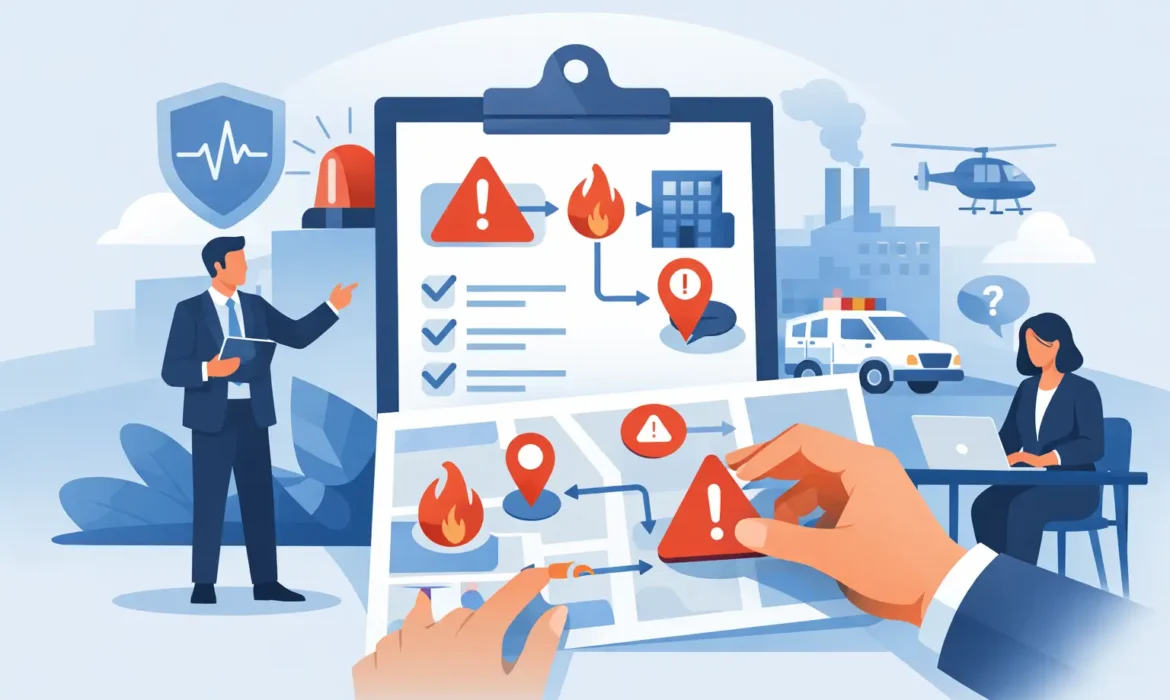
A fire alarm sounds during a night shift. A worker is injured near moving equipment. A chemical spill reaches a drainage point. In these moments, a document stored in a shared folder is not enough. An emergency response plan consultant helps employers turn site risks, workforce responsibilities, and regulatory duties into clear actions people can follow under pressure.
For Singapore employers in construction, manufacturing, logistics, engineering, facilities, and commercial operations, emergency readiness is closely tied to business continuity. Delayed decisions can expose people to harm, interrupt projects, damage assets, and create compliance concerns. A well-prepared response plan gives supervisors, contractors, visitors, and employees a common operating framework when normal work conditions change without warning.
What an Emergency Response Plan Consultant Does
An emergency response plan consultant assesses how a workplace could be affected by foreseeable incidents and develops practical procedures for controlling those events. The work goes beyond producing an emergency contact list or posting an evacuation map. It connects risk assessment findings to real site conditions, available resources, response roles, communication channels, and recovery priorities.
For a construction project, that may involve rescue arrangements for work at height, temporary site access, crane-related incidents, fire hazards, or coordination with multiple subcontractors. For a warehouse or manufacturing facility, the priorities may include forklift incidents, machinery isolation, hazardous-material handling, medical response, and evacuation across shift teams. An office or retail environment may require a stronger focus on fire evacuation, visitor management, security incidents, and support for occupants with mobility needs.
The consultant’s role is to identify gaps before an incident exposes them. This usually includes reviewing existing safety documentation, inspecting the workplace, speaking with responsible personnel, clarifying emergency roles, and preparing a site-specific plan that is understandable for the people expected to use it.
When External Support Makes Business Sense
Some organizations have capable internal safety personnel and only need an independent review or an update after operational changes. Others need more hands-on assistance because their site, workforce, or risk profile has changed faster than their internal systems can keep pace. The right level of consulting support depends on those circumstances.
External support is especially valuable when a company is starting a new project, mobilizing a large contractor workforce, moving into a new facility, introducing higher-risk processes, or returning to work after a serious incident. It is also useful when procedures exist but have not been tested, staff turnover has affected emergency roles, or supervisors are unsure who has authority to stop work and coordinate an evacuation.
For organizations managing several sites, a standardized framework can improve control, but identical plans rarely work across every location. A distribution center, a fit-out project, and an industrial maintenance site may share core reporting principles while requiring different assembly arrangements, emergency equipment, access controls, and rescue procedures. Bespoke planning protects against the false confidence that comes from copying a generic template.
Warning Signs Your Plan Needs Review
A plan should be reviewed whenever the workplace changes in a meaningful way. New equipment, a revised floor layout, different chemical storage, altered access routes, changes to tenant occupancy, or a new contractor can all affect response readiness.
There are also operational warning signs. If emergency wardens cannot explain their roles, shift teams do not know where to report, contractor briefings omit emergency procedures, or drill observations repeatedly show confusion, the plan needs attention. The same applies when emergency contacts are outdated, first-aid coverage is inconsistent, or assembly areas are no longer safe or accessible.
Building a Plan People Can Use Under Pressure
Effective emergency planning starts with the work being done, not with a prewritten form. A consultant should first understand the site layout, operating hours, workforce composition, high-risk activities, equipment, and third-party interfaces. This creates a clearer picture of which incidents are realistic and what resources would be needed to respond.
The next step is defining command and communication. Employees need to know how to raise an alarm, who contacts emergency services, who accounts for personnel, and who provides information to responders. Supervisors need clear authority lines so that important decisions do not stall while everyone waits for approval.
The plan should also account for people who may not know the workplace well. Visitors, delivery drivers, temporary workers, overseas hires, and subcontractors may need different briefing methods than permanent employees. In multilingual workplaces, concise signage, visual instructions, and toolbox briefings can be more effective than relying on lengthy written procedures alone.
A practical plan typically addresses fire, medical emergencies, hazardous releases, severe weather where relevant, security threats, equipment incidents, and evacuation. Higher-risk sites may require more detailed rescue procedures for confined spaces, work at height, lifting operations, electrical work, or plant shutdown activities. The aim is not to create a thick manual. It is to provide enough direction for a disciplined, timely response without overwhelming the people responsible for acting.
Training and Drills Are Where the Plan Is Proven
A written plan is only the starting point. Employees must understand what it means for their role, and managers need confidence that the response can be coordinated without unnecessary delay. Training should reflect the tasks and risks people actually encounter.
For example, an evacuation drill at an occupied office can test alarm response, warden coverage, visitor accountability, and assembly-point communication. A drill at an industrial facility may need to test machinery shutdown, exclusion zones, emergency access, spill containment, or coordination between operations and maintenance teams. A construction site may need to confirm that changing work areas and temporary routes do not prevent safe evacuation.
Drills should not be treated as a pass-or-fail exercise. They are an opportunity to observe what happens when normal routines are interrupted. Did employees receive the alarm? Were contractors included? Was the headcount accurate? Could emergency vehicles access the site? Did the appointed team understand its responsibilities?
After each drill, findings should be documented, assigned to accountable personnel, and closed out. This is where a safety consultant can add particular value by translating observations into corrective actions, revised procedures, and focused refresher briefings.
Aligning Emergency Planning With Workforce Management
Emergency readiness often breaks down at the point where staffing and safety management operate separately. A site may have qualified workers, but no reliable record of who is trained as a first aider, fire warden, confined-space attendant, or emergency response team member on each shift. A project may have a plan, but new outsourced personnel may not receive a proper site induction before beginning work.
Employers should align workforce deployment with emergency roles. This means confirming adequate coverage across day and night shifts, maintaining current competency records, and planning for leave, turnover, and manpower fluctuations. On projects with multiple contractors, the principal employer and site leaders should clarify how each company communicates incidents and participates in emergency arrangements.
This integrated approach is particularly useful for businesses managing urgent hiring requirements alongside tight project schedules. Reliable manpower placement and safety onboarding should support one another. A worker who is technically capable but unfamiliar with the site’s emergency rules can still create avoidable risk.
Choosing the Right Emergency Response Plan Consultant
The best consultant is not simply the one who can deliver documentation quickly. Employers should look for someone who understands their industry, can communicate clearly with both management and site personnel, and has experience translating compliance expectations into workable controls.
Ask how the consultant conducts site assessments, whether drills and briefings are included, and how recommendations are prioritized. Clarify what deliverables will be provided, such as emergency response procedures, role assignments, contact lists, evacuation drawings, training records, drill reports, and corrective-action tracking. The scope should be proportional to the work. A small office does not need the same system as a chemical-handling facility, while a high-risk industrial site should not rely on a basic evacuation checklist.
ProSkill Workforce Pte Ltd supports employers with customized workplace safety consulting that can include emergency response planning, risk assessment, safety documentation, toolbox briefings, inspections, and incident investigation support. This combination is valuable for organizations that need their safety systems to work alongside staffing, contractor coordination, and day-to-day site operations.
Keep the Plan Current, Not Just Compliant
Emergency plans are living operating documents. They should be reviewed after incidents, drills, layout changes, staffing changes, new work activities, and contractor mobilization. The most dependable plans are visible in daily operations: supervisors refer to them during briefings, workers know their reporting routes, and management follows through on gaps identified during testing.
A capable emergency response plan consultant brings structure to this process, but sustained readiness comes from the employer’s commitment to practicing the plan and keeping responsibilities current. When people understand what to do before an emergency occurs, they are better positioned to protect one another, preserve operations, and respond with control when every minute matters.